What Is a Payday Loan in Canada? (2026 Complete Guide)
March 17, 2026
What Is a Payday Loan in Canada?
Last updated April 2026
If you’re searching for what a payday loan is in Canada or how payday loans work, you’re likely trying to make an important financial decision — not just learn a definition.
Maybe you’ve seen ads for fast cash, instant approvals, or “no credit check loans.” Or maybe you’re in a situation where you need money quickly and want to understand your options.
This guide will walk you through everything you need to know in a clear, practical way — including how payday loans work, what they really cost, the risks involved, and when (if ever) they make sense.
Key Facts About Payday Loans in Canada
- Payday loans in Canada are short-term loans ($100–$1,500) repaid within 14–62 days
- They typically cost $14–$17 per $100 borrowed
- APR rates can exceed 300%, making them one of the most expensive borrowing options
- Best used for emergencies only — not long-term financial needs
- Cheaper alternatives like personal loans or overdrafts are usually better
How Payday Loans Work in Canada
A payday loan is a short-term, high-cost loan designed to help you cover expenses until your next payday.
In Canada, payday loans typically:
- Range from $100 to $1,500
- Must be repaid within 14 to 62 days
- Include a fixed fee per $100 borrowed
The core idea is simple:
You borrow money now and repay it in full — plus fees — when your next paycheque arrives.
Typical Payday Loan Terms and Costs in Canada
Payday loans in Canada are short-term loans typically ranging from $100 to $1,500, with repayment due within 14 to 62 days. They are designed for quick access to cash and usually come with high fees and fast approval times.
| Feature | Payday Loan in Canada |
|---|---|
| Loan Amount | $100 – $1,500 |
| Repayment Term | 14 – 62 days |
| Approval Time | Minutes |
| Funding Speed | Same day or next day |
| Credit Check | Usually soft or minimal |
| Cost | $14–$17 per $100 |
| APR Equivalent | 300%+ |
These terms make payday loans fast and accessible — but also significantly more expensive than other borrowing options.
How Payday Loans Work in Canada (Step-by-Step)
Understanding the process is key to avoiding surprises.
Step 1: Apply for the Loan
You can apply either:
- Online (most common)
- In-store (with some lenders)
You’ll typically need to provide:
- Identification
- Proof of income
- Banking details
Step 2: Get Approved
Approval is usually fast — often within minutes.
Unlike traditional loans, payday lenders:
- Don’t rely heavily on credit scores
- Focus on your income and ability to repay
Step 3: Receive Your Money
If approved, funds are deposited:
- Same day (in many cases)
- Or the next business day
Step 4: Repayment
The full amount (loan + fees) is automatically withdrawn from your bank account on your next payday.
How Much Do Payday Loans Cost in Canada?
This is where payday loans become controversial.
Typical Fees
Most provinces allow lenders to charge:
$14–$17 per $100 borrowed
Real Example
If you borrow $500:
- Fee: ~$75
- Total repayment: ~$575
Why This Is Expensive
Because payday loans are short-term, the annual percentage rate (APR) can exceed:
300% to 600%+
For comparison:
- Credit cards: ~20%
- Personal loans: ~6%–46%
Example payday loan costs
Payday loans in Canada typically cost between $14 and $17 per $100 borrowed. While the fee may seem small, the short repayment period results in very high annual percentage rates, often exceeding 300%.
| Amount Borrowed | Fee (Avg) | Total Repayment | Approx APR |
|---|---|---|---|
| $200 | $30 | $230 | 300%+ |
| $500 | $75 | $575 | 300%+ |
| $1,000 | $150 | $1,150 | 300%+ |
Even small loans can become expensive quickly, especially if they are used repeatedly.
How to Apply for a Payday Loan in Canada
To apply for a payday loan in Canada, you usually need to complete an online or in-store application, provide identification, proof of income, and your banking details, then wait for approval. Many lenders offer decisions within minutes and funding the same day or the next business day.
Before applying, make sure you understand the total repayment amount, the due date, and whether you can realistically repay the loan on time.
- Choose a licensed lender in your province
- Complete the application form
- Provide ID, income, and banking information
- Review the loan agreement carefully
- Accept the loan only if you can repay it on time
Payday Loan Rules by Province
Payday lending is regulated at the provincial level in Canada.
Ontario
- Max cost: ~$15 per $100
- No rollovers allowed
- Strong borrower protections
British Columbia (BC)
- Max cost: ~$15 per $100
- Cooling-off period available
Alberta
- Max cost: ~$14 per $100
- Strict disclosure requirements
What are payday loan laws in Canada?
Payday loan laws in Canada vary by province, but most regions cap borrowing costs between $14 and $17 per $100. Regulations also include consumer protections such as disclosure requirements and limits on repeat borrowing.
| Province | Max Cost per $100 | Key Rule |
|---|---|---|
| Ontario | ~$15 | No rollovers |
| British Columbia | ~$15 | Cooling-off period |
| Alberta | ~$14 | Strong disclosures |
These rules help protect borrowers, but payday loans remain one of the most expensive forms of credit.
Why This Matters
Your province determines:
- How much you pay
- Your consumer rights
- What lenders can and cannot do
Are Payday Loans Legal in Canada?
In Canada, payday lending is regulated under both federal criminal law and provincial consumer protection laws, which set maximum borrowing costs and require lenders to be licensed.
Yes — payday loans are legal and regulated across Canada.
However, lenders must:
- Be licensed in your province
- Clearly disclose fees
- Follow strict rules around repayment and collections
Always verify that a lender is properly licensed before borrowing.
Who Uses Payday Loans?
Payday loans are typically used by people exploring options like bad credit loans in Canada who need fast access to cash.
- Have bad or limited credit
- Need money urgently
- Cannot access traditional loans
Common uses include:
- Emergency car repairs
- Rent shortfalls
- Utility bills
- Medical expenses
Can you be denied a payday loan in Canada?
Yes, you can be denied a payday loan in Canada. While approval is easier than traditional loans, lenders still require proof of income, a valid bank account, and the ability to repay the loan. Applications may be rejected if income is insufficient, banking history is unstable, or identity cannot be verified.
How fast can you get a payday loan in Canada?
In many cases, you can get a payday loan in Canada within minutes of approval, with funds deposited the same day or by the next business day. The exact timing depends on the lender, the time of application, your bank, and whether your information can be verified quickly.
| Stage | Typical Time |
|---|---|
| Application | 5–10 minutes |
| Approval decision | Minutes |
| Bank verification | Minutes to a few hours |
| Funding | Same day or next business day |
Fast funding is one of the main reasons borrowers use payday loans, but speed should never be the only factor you consider.
Pros and Cons of Payday Loans
Pros
✔ Fast approval (often minutes)
✔ Easy to qualify (even with bad credit)
✔ Same-day funding available
✔ Simple application process
Cons
✘ Extremely high cost
✘ Short repayment period
✘ Risk of repeat borrowing
✘ Can lead to long-term debt
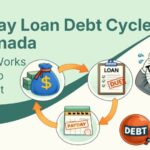
What Is the Payday Loan Debt Cycle?
One of the biggest risks is the debt cycle.
How It Happens
- You take a payday loan
- Payday arrives
- You repay the loan
- You’re short on cash again
- You take another loan
Over time:
- Fees accumulate
- Financial pressure increases
- It becomes harder to break the cycle
Why It’s Dangerous
Because each loan reduces your available income, making future borrowing more likely.
Real-Life Example of the Debt Cycle
Let’s say you borrow $500:
- You repay $575 on payday
- You now lack funds for bills
- You borrow another $500
After a few cycles, you may pay hundreds in fees without reducing your financial stress.
Are Payday Loans Safe?
Payday loans are legally safe, but not always financially safe.
They can be useful in specific situations — but risky if used frequently.
Safe Use Scenario
- One-time emergency
- Clear repayment plan
Risky Use Scenario
- Ongoing financial issues
- Multiple loans
- No repayment certainty
Warning Signs of Predatory Payday Lending
While payday loans are regulated in Canada, some lenders may still use aggressive or misleading practices. Watch for these warning signs:
- Lack of clear fee disclosure
- Pressure to borrow more than needed
- Unclear repayment terms
- Requests for upfront fees
Always verify that a lender is licensed in your province before applying.
Payday Loan vs Personal Loan
Understanding alternatives is critical.
Payday Loan
- Short-term
- Very high cost
- Lump-sum repayment
Personal Loan
- Longer repayment period
- Lower interest rates
- Structured payments
In most cases, a personal loan is the better option.
What is the difference between a payday loan and a personal loan?
The main difference between a payday loan and a personal loan is cost and repayment structure. Payday loans are short-term and high-cost, while personal loans offer longer terms and lower interest rates with installment payments.
| Feature | Payday Loan | Personal Loan |
|---|---|---|
| Loan Term | 2–8 weeks | 6 months – 5 years |
| Interest Cost | Very high | Much lower |
| Repayment | Lump sum | Installments |
| Credit Requirement | Low | Moderate |
| Best For | Emergencies | Larger planned expenses |
In most cases, personal loans are the more affordable and sustainable option.

Payday Loan vs Credit Card or Overdraft
Credit Card / Overdraft
- Lower interest rates
- Flexible repayment
Payday Loan
- Higher cost
- Immediate repayment required
If available, credit cards or overdrafts are usually cheaper.
Is a payday loan better than an overdraft?
In most cases, a payday loan is not better than an overdraft. Overdrafts and credit cards usually have lower interest rates and more flexible repayment options, making them a cheaper alternative.
| Feature | Payday Loan | Overdraft | Credit Card |
|---|---|---|---|
| Cost | Very high | Moderate | Moderate |
| Repayment | Full, next payday | Flexible | Flexible |
| Speed | Fast | Instant | Instant |
| Risk | High | Lower | Lower |
If you have access to an overdraft or credit card, they are typically the better financial choice.
How Payday Lenders Make Money
Payday lenders earn revenue through fixed fees per $100 borrowed.
Because loans are short-term, this creates:
- High effective interest rates
- Strong profitability for lenders
The business model relies on:
- High volume of loans
- Repeat borrowing by some users
How to Avoid Payday Loan Traps
If you’re considering a payday loan, follow these tips:
1. Borrow Only What You Need
Avoid borrowing more than necessary.
2. Have a Clear Repayment Plan
Know exactly how you’ll repay the loan.
3. Avoid Repeat Borrowing
One-time use only — avoid cycles.
4. Compare Alternatives First
Always check cheaper options before applying.
How to Choose a Payday Lender in Canada
Not all payday lenders are the same. Before applying, compare:
- Fees and total repayment amount
- Approval speed and funding time
- Customer reviews and reputation
- Licensing in your province
Taking a few minutes to compare lenders can help you avoid higher costs and reduce risk.
Better Alternatives to Payday Loans
Before taking a payday loan, consider:
Personal Loans
Lower cost and longer repayment terms.
Bad Credit Loans
More flexible and often cheaper.
Credit Card or Overdraft
Usually significantly lower cost.
Borrowing from Family or Friends
No interest, but requires trust.
When Should You Use a Payday Loan?
Use only if:
- You have a true emergency
- You can repay in full on time
- You have no lower-cost options
Avoid if:
- You’re already in debt
- You need long-term financial help
- You’re unsure about repayment
When should you use a payday loan?
A payday loan should only be used for short-term emergencies when no lower-cost options are available and you are confident you can repay the loan on time.
| Situation | Payday Loan Use |
|---|---|
| Emergency expense | ✔ Appropriate |
| One-time shortfall | ✔ Acceptable |
| Ongoing debt | ✘ Risky |
| Multiple loans | ✘ High risk |
Using payday loans outside of emergencies significantly increases the risk of falling into a debt cycle.
Who Should Avoid Payday Loans Completely
You should avoid payday loans if:
- You rely on borrowing regularly
- Your income is unstable
- You’re struggling with existing debt
FAQs About Payday Loans in Canada
What is a payday loan in Canada?
A payday loan is a short-term, high-cost loan (typically $100–$1,500) that is repaid in full on your next payday, usually within 14–62 days.
Are payday loans legal in Canada?
Yes. Payday loans are legal and regulated at the provincial level. Lenders must be licensed and follow strict rules on fees and disclosures.
How much do payday loans cost in Canada?
Most provinces allow fees of about $14–$17 per $100 borrowed. This can translate to APRs of 300%+ due to the short repayment period.
Do payday loans affect your credit score?
Applying often involves a soft check (no impact), but missed payments can be sent to collections and negatively affect your credit.
Can you have more than one payday loan at a time?
In most provinces, no. Regulations typically restrict borrowers to one active payday loan at a time.
How fast can you get a payday loan?
Approval can take minutes, and funds are often deposited the same day or the next business day.
What happens if you can’t repay a payday loan?
You may face NSF fees, additional lender charges, collections activity, and potential credit damage.
Are there cheaper alternatives to payday loans?
Yes. Personal loans, credit cards, overdrafts, and some bad credit installment loans are usually more affordable options.
When should you use a payday loan?
Only for true emergencies when you have no lower-cost options and are confident you can repay on time.
Are payday loans safe?
They are legally regulated, but financially risky if used repeatedly or without a clear repayment plan.
Before choosing a payday loan, take a few minutes to compare your options — it could save you hundreds in fees.
Final Thoughts: Are Payday Loans a Good Idea?
Payday loans are neither inherently good nor bad — they are a tool.
Used correctly:
They can solve short-term financial problems.
Used repeatedly:
They can create long-term financial stress.
The key is understanding the cost, the risks, and your alternatives.
Bottom Line
Payday loans are fast and accessible — but expensive.
Before borrowing, always:
- Compare your options
- Choose the lowest-cost solution
- Make sure you can repay on time
This content is for informational purposes only and does not constitute financial advice.

The FatCat Loans Editorial Team delivers clear, accurate, and unbiased guidance on loans, credit, and personal finance in Canada. Our writers follow strict editorial standards to ensure every article is trustworthy, well-researched, and easy to understand, helping readers make confident financial decisions.