Alpine Credits Review Canada (2026): Home Equity Loans, Rates, Pros & Cons
June 25, 2026
Alpine Credits Review Canada (2026)
Published June 2026
Alpine Credits is one of Canada’s best-known home equity lenders, helping homeowners access financing using the equity in their property. But is Alpine Credits a good option if you need a loan, and how does it compare to other borrowing solutions available to Canadians?
In this Alpine Credits review, we’ll cover how the lender works, its loan products, eligibility requirements, customer reviews, advantages, disadvantages, and whether it may be the right choice for your financial situation.
Alpine Credits Review Summary
- Loan Type: Home equity loans
- Loan Amounts: Varies based on home equity and qualification
- Credit Requirements: Flexible compared to traditional banks
- Funding Speed: Typically faster than many traditional lenders
- Best For: Homeowners looking to borrow against home equity
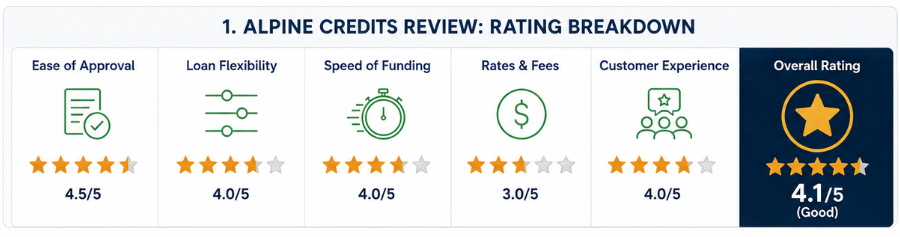
- Our Rating: 4.1/5
Why We Rated Alpine Credits 4.1/5: Alpine Credits offers financing solutions for homeowners who may not qualify through traditional banks. The company specializes in home equity lending and may be an option for borrowers with imperfect credit. However, because loans are secured against your property, it’s important to carefully review all terms and borrowing costs before proceeding.
What Is Alpine Credits?
Alpine Credits is a Canadian lender that specializes in home equity financing. Unlike many banks that focus heavily on credit scores and income qualifications, Alpine Credits primarily evaluates the amount of equity available in a borrower’s property.
Founded in 1969, the company has helped thousands of Canadian homeowners access funds for debt consolidation, home renovations, emergency expenses, investments, and other major financial needs.
The lender operates across much of Canada and is known for offering financing solutions to borrowers who may have difficulty qualifying through traditional financial institutions.
How Does Alpine Credits Work?
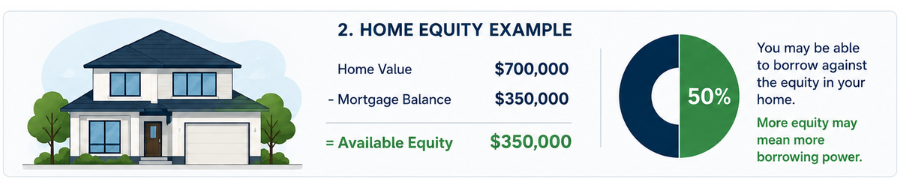
Alpine Credits provides loans that are secured by the equity in your home. Home equity represents the difference between your home’s current market value and any outstanding mortgage balance.
For example, if your property is worth $700,000 and you owe $350,000 on your mortgage, you may have approximately $350,000 in home equity.
Rather than focusing solely on credit scores, Alpine Credits considers the available equity in your property when evaluating loan applications. This approach may allow some homeowners with bruised credit or unique financial circumstances to access financing that would otherwise be difficult to obtain.
The process generally includes:
- Submitting an application.
- Verifying income, identity, and property ownership.
- Assessing available home equity.
- Reviewing loan terms and conditions.
- Completing legal and funding requirements.
- Receiving loan proceeds.
What Types of Loans Does Alpine Credits Offer?
Alpine Credits primarily focuses on home equity lending. Borrowers commonly use these funds for:
- Debt consolidation
- Home renovations
- Emergency expenses
- Business financing
- Investment opportunities
- Major purchases
- Tax payments
- Education expenses
Because the loans are secured by real estate, borrowers may be able to access larger loan amounts than they could through many unsecured lending products.
How Much Can You Borrow From Alpine Credits?
The amount you can borrow depends on several factors, including your home’s value, existing mortgage balance, available equity, income, and overall financial profile.
Generally speaking, homeowners with significant equity may qualify for substantially larger loan amounts than would typically be available through personal loans or payday loans.
If you’re exploring your options, it may also be worthwhile to compare home equity loans in Canada from multiple lenders before making a decision.
Can You Get Approved With Bad Credit?
One of the main reasons borrowers consider Alpine Credits is its flexible approach to credit.
While traditional banks often place significant emphasis on credit scores, Alpine Credits focuses more heavily on the equity available in a borrower’s property. This may make financing accessible to some homeowners who have experienced past credit challenges.
That said, approval is never guaranteed. The lender still reviews factors such as income, debt obligations, property value, and repayment ability before making a lending decision.
If your credit score needs improvement, you may also find our guide on how to improve your credit score in Canada helpful.
Alpine Credits Rates and Fees
As with any secured lending product, rates and fees can vary depending on the borrower, the property, loan amount, and overall risk profile.
Rather than focusing exclusively on the advertised interest rate, borrowers should carefully review:
- Total borrowing costs
- Origination fees
- Legal fees
- Appraisal costs
- Prepayment penalties
- Repayment flexibility
Understanding the complete cost of borrowing is essential before accepting any home equity loan offer.
What Can You Use an Alpine Credits Loan For?
One of the biggest advantages of home equity financing is flexibility. Unlike some loan products that restrict how funds can be used, Alpine Credits loans can often be used for a variety of personal and financial needs.
Many borrowers use home equity financing to consolidate higher-interest debt into a single monthly payment. If your goal is simplifying multiple debts, you may also want to compare available debt consolidation loan options before applying.. Others may use the funds to complete home renovations, cover unexpected expenses, start or expand a business, or pay for major life events.
Common uses include:
- Debt consolidation
- Home improvements and renovations
- Business investments
- Medical expenses
- Tax payments
- Tuition and education costs
- Emergency expenses
- Large purchases
Before borrowing against your home, it’s important to ensure the loan serves a clear financial purpose and fits within your long-term budget.
Is Alpine Credits Safe?
Many Canadians researching alternative lenders ask whether Alpine Credits is safe and trustworthy.
Alpine Credits has been operating in Canada for decades and has established itself as one of the country’s most recognizable home equity lenders. The company follows Canadian lending regulations and works with borrowers across multiple provinces.
However, borrowers should remember that home equity loans are secured by real estate. This means your property acts as collateral for the loan. If you fail to meet your repayment obligations, there may be serious financial consequences.
Before accepting any loan offer, make sure you:
- Understand the total borrowing cost
- Review all fees and charges
- Confirm repayment obligations
- Understand any penalties
- Borrow only what you genuinely need
- Have a clear repayment plan
Used responsibly, home equity loans can be an effective borrowing tool. However, because your home is involved, borrowers should proceed carefully and fully understand the risks.
Is Alpine Credits Legit?
Yes. Alpine Credits is a legitimate Canadian lender that has been operating since 1969 and specializes in home equity financing.
Before applying with any lender, it’s important to understand how home equity financing works and the risks associated with borrowing against your property. The Financial Consumer Agency of Canada (FCAC) provides guidance on borrowing against home equity, including key considerations for Canadian homeowners.
The company has helped thousands of Canadian homeowners access financing when traditional lenders may have declined their applications. Alpine Credits has built a strong presence in the alternative lending market and remains one of the most recognizable names in home equity lending.
That said, legitimacy should not be confused with suitability. Every borrower has different needs, and Alpine Credits may not be the best option for everyone. Comparing multiple lenders is always recommended before making a decision.
What Do Customers Say About Alpine Credits?
Customer reviews for Alpine Credits are generally mixed, which is common among lenders operating in the alternative financing space.
Positive reviews frequently mention:
- Helpful staff
- Flexible approval requirements
- Access to funding when banks declined applications
- Professional service
- Debt consolidation solutions
Negative reviews often focus on:
- Borrowing costs
- Loan fees
- Processing timelines
- Communication issues
As with any lender, individual experiences vary. Borrowers should carefully review loan terms and compare alternatives before proceeding.
Alpine Credits Pros and Cons
Before applying for any home equity loan, it’s important to weigh both the benefits and drawbacks.
Advantages of Alpine Credits
- Specializes in home equity lending
- Long operating history in Canada
- May approve borrowers with less-than-perfect credit
- Can provide access to larger loan amounts
- Funds can be used for many different purposes
- May help homeowners consolidate high-interest debt
- Available across much of Canada
Disadvantages of Alpine Credits
- Loans are secured against your property
- Not available to renters
- Additional fees may apply
- Approval and funding may take longer than unsecured loans
- Borrowing against your home increases financial risk
- May not offer the lowest rates available
For homeowners with substantial equity, the benefits may outweigh the drawbacks. However, it’s important to understand that failure to repay the loan could put your property at risk.
Alpine Credits vs Traditional Banks
Many Canadians compare Alpine Credits with banks when searching for home equity financing.
| Feature | Alpine Credits | Traditional Bank |
|---|---|---|
| Credit Requirements | More Flexible | Often Stricter |
| Home Equity Focus | Yes | Varies |
| Bad Credit Approval | May Be Possible | Less Likely |
| Loan Amounts | Based on Equity | Based on Multiple Factors |
| Approval Process | Alternative Lending Approach | Traditional Underwriting |
Traditional banks may offer lower rates to highly qualified borrowers. However, homeowners who have experienced credit challenges may find it easier to qualify through a lender like Alpine Credits.
This is particularly true for borrowers who have substantial equity but don’t meet a bank’s strict credit requirements.
Alpine Credits vs Home Equity Loans
One mistake many borrowers make is treating Alpine Credits as the only available option.
In reality, Alpine Credits is simply one lender in the broader home equity lending market.
Before applying, it’s worth comparing several home equity loan options in Canada to determine:
- Available borrowing limits
- Interest rates
- Fees and closing costs
- Repayment flexibility
- Qualification requirements
If you’re considering borrowing against your property, reviewing multiple home equity loan lenders can help ensure you’re getting the best possible terms.
Is Alpine Credits Available Across Canada?
Alpine Credits serves homeowners in many provinces across Canada, although specific lending programs and qualification requirements may vary depending on location.
Homeowners commonly seek Alpine Credits financing in:
- Ontario
- Alberta
- British Columbia
- Manitoba
- Saskatchewan
- Nova Scotia
- New Brunswick
Because lending regulations can differ between provinces, borrowers should verify availability and program details directly with the lender before applying.
Regardless of where you live, comparing multiple lending options can help you find a solution that fits your financial goals.
Who Should Consider Alpine Credits?
Alpine Credits may be a good fit for homeowners who:
- Have significant equity in their property
- Need access to larger loan amounts
- Want to consolidate debt
- Have experienced credit challenges
- Need financing for renovations
- Want to borrow against their home’s value
Many borrowers turn to Alpine Credits after being declined by traditional lenders because the company places greater emphasis on available home equity.
Who Should Avoid Alpine Credits?
Alpine Credits may not be the right solution if:
- You don’t own a home
- You need a small short-term loan
- You need same-day funding
- You have very little home equity
- You qualify for lower-cost financing elsewhere
- You’re uncomfortable using your property as collateral
In these situations, alternatives such as bad credit loans, installment loans, or lines of credit may be worth exploring.
Alpine Credits Alternatives
Before committing to any home equity loan, compare several borrowing options.
Possible alternatives include:
- Home equity loans
- Installment loans
- Bad credit personal loans
- Personal lines of credit
- Credit union loans
- Debt consolidation loans
The best solution depends on your financial situation, credit profile, and borrowing needs.
For many homeowners, comparing several home equity loan providers can lead to better rates and more flexible repayment terms.

Should You Apply With Alpine Credits?
Alpine Credits May Be Worth Considering If:
✓ You own a home
✓ You have significant home equity
✓ You need access to a larger loan amount
✓ You have less-than-perfect credit
✓ You’re looking for alternatives to traditional banks
If you’re a homeowner with available equity, Alpine Credits may offer access to financing that can be more difficult to obtain through traditional banks. The lender’s flexible qualification approach can be especially appealing for borrowers seeking debt consolidation, renovation funding, or larger loan amounts.
However, because the loan is secured by your property, borrowers should compare multiple lenders and carefully review all costs before proceeding.
A home equity loan can be a powerful financial tool, but it should be approached with the same level of care as any major financial commitment.
Our Verdict
Alpine Credits is one of Canada’s most established home equity lenders and may be a worthwhile option for homeowners who have available equity and need access to financing.
Its flexible qualification approach can help borrowers who may not fit traditional bank lending criteria, making it an attractive option for some Canadians.
However, because these loans are secured against your property, it’s important to compare multiple lenders, understand all fees and terms, and ensure the loan fits your long-term financial goals.
For homeowners seeking to unlock the value of their property, Alpine Credits is certainly worth considering—but it should be part of a broader comparison of available home equity loan options.
Frequently Asked Questions
Is Alpine Credits legit?
Yes. Alpine Credits is a legitimate Canadian lender that has been operating since 1969 and specializes in home equity financing.
Can I get an Alpine Credits loan with bad credit?
Possibly. Alpine Credits focuses heavily on available home equity, which may help some homeowners qualify even if their credit is less than perfect.
What credit score do I need for Alpine Credits?
There is no publicly stated minimum credit score. Approval depends on several factors, including home equity, income, property value, and overall financial circumstances.
How much can I borrow from Alpine Credits?
Loan amounts vary depending on your available home equity, property value, income, and qualification profile.
Does Alpine Credits require collateral?
Yes. Loans are secured against your property, meaning your home serves as collateral.
Can I use an Alpine Credits loan for debt consolidation?
Yes. Debt consolidation is one of the most common uses for home equity financing.
How long does it take to get approved?
Approval and funding timelines vary, but home equity loans generally take longer than payday loans or unsecured personal loans.
Is Alpine Credits better than a bank?
That depends on your situation. Banks may offer lower rates to highly qualified borrowers, while Alpine Credits may be more flexible for homeowners with credit challenges.
What are the alternatives to Alpine Credits?
Alternatives include home equity loans, installment loans, lines of credit, credit union loans, and bad credit personal loans.
Is Alpine Credits worth it?
For homeowners with significant equity who need access to financing, Alpine Credits may be worth considering. However, borrowers should always compare multiple lenders before making a final decision.

The FatCat Loans Editorial Team delivers clear, accurate, and unbiased guidance on loans, credit, and personal finance in Canada. Our writers follow strict editorial standards to ensure every article is trustworthy, well-researched, and easy to understand, helping readers make confident financial decisions.