KOHO Review Canada 2026: Fees, Credit Building & Cover
February 26, 2026
Our Review of KOHO Canada
Last Updated: September 2026
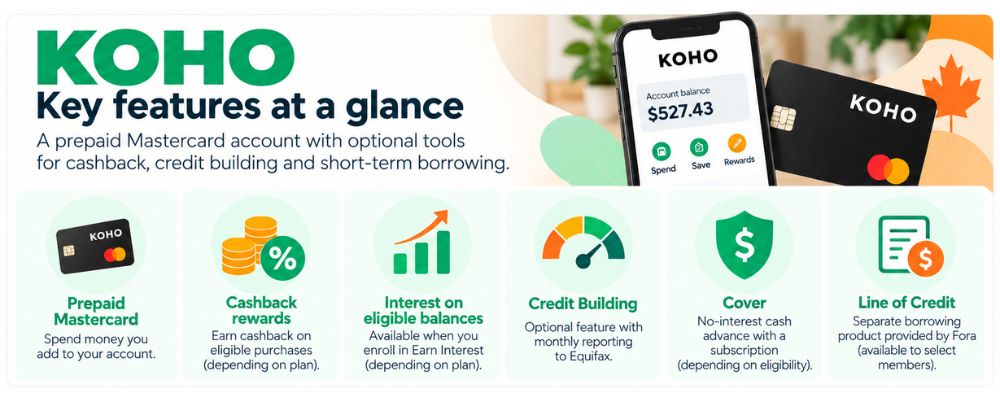
KOHO is a Canadian financial technology company offering a prepaid Mastercard account with spending tools, cashback and optional features for credit building and short-term borrowing.
Its main account is prepaid, so you’re generally spending money you’ve already added rather than borrowing on a traditional credit card. KOHO also offers paid plans and optional products including Credit Building, Cover cash advances and, for select members, a separate Line of Credit provided by Fora.
This KOHO review looks at its current plans and fees, Credit Building, Cover, Line of Credit, cashback, account features, safety and the main pros and cons to consider.
What Is KOHO?
KOHO is a Canadian fintech company rather than a traditional bank. Its core product combines a prepaid Mastercard with an app for managing spending, saving and other financial features.
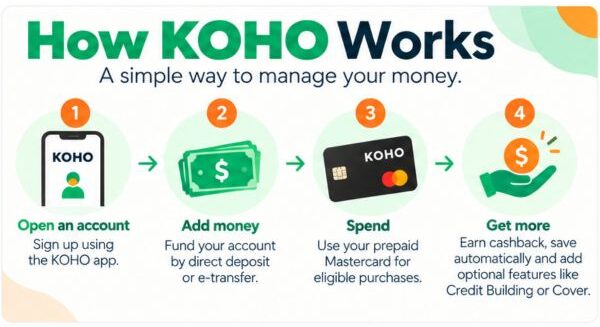
You add money to your KOHO account and can then use the prepaid Mastercard for eligible purchases. Because the core card is prepaid, you’re generally spending from your available balance rather than carrying a credit-card balance.
Depending on your plan and eligibility, KOHO also offers features such as:
- Cashback on eligible purchases
- Interest on eligible balances when enrolled in Earn Interest
- Credit Building
- Cover cash advances
- A separate personal Line of Credit for select members
It’s important to distinguish these products. KOHO Credit Building, Cover and the KOHO Line of Credit are not the same thing, and each has its own costs, eligibility requirements and terms.
KOHO Canada: Key Facts
| Feature | Current Details |
|---|---|
| Core product | Prepaid Mastercard account and money app |
| Plans | Non-Member, Essential, Extra and Everything |
| Essential | $7/month or $0 with a qualifying action; $0/month on annual billing |
| Extra | $18/month or $144/year |
| Everything | $22/month or $177/year |
| Credit Building | Optional feature with monthly reporting to Equifax |
| Cover | No-interest cash advance available through a Cover subscription |
| Personal Line of Credit | Provided by Fora; currently available to select KOHO members |
Affiliate disclosure: FatCat Loans may receive a commission if you sign up through this KOHO link. This doesn’t increase the cost of your KOHO account or optional features.

KOHO Plans and Fees
KOHO currently offers a free Non-Member option plus three plans: Essential, Extra and Everything.
| Plan | Monthly Billing | Annual Billing |
|---|---|---|
| Non-Member | Free | Free |
| Essential | $7/month or $0 with a qualifying action | $0/month |
| Extra | $18/month | $144/year ($12/month equivalent) |
| Everything | $22/month | $177/year ($14.75/month equivalent) |
KOHO currently advertises a 30-day free trial for its plans. Features and benefits vary between plans, so compare the cost of the plan with the features you expect to use.
What Do KOHO Plans Include?
Depending on the plan, features may include cashback, interest on eligible balances, budgeting and savings tools, and discounts on certain optional KOHO services.
Some services, including Credit Building and Cover, can have their own costs or subscription requirements.
KOHO’s pricing and plan features can change, so check its current plan comparison before upgrading.
How Does KOHO Credit Building Work?
KOHO Credit Building is an optional feature designed to help users establish or rebuild credit history.
KOHO says Credit Building activity is reported to Equifax every month, including your selected utilization amount and payment activity.
KOHO’s current Credit Building information references a $225 dedicated line of credit. It doesn’t charge interest, and KOHO says you can select the utilization amount reported each month.
You don’t need to withdraw the available funds for Credit Building to work. KOHO says the feature can be used for credit reporting without withdrawing from the line of credit.
Credit Building is not a traditional credit card.
If you’re comparing different ways of establishing credit, see our guide to improving your credit score in Canada.
How Much Does KOHO Credit Building Cost?
KOHO charges for Credit Building, but the amount can depend on your KOHO plan. Its current information says Extra members receive a 30% discount, while pricing can differ for other plans.
Because KOHO can change Credit Building pricing and promotions, check the price displayed in your KOHO account before subscribing.
The important comparison isn’t simply whether Credit Building costs less than another credit product. Consider how long you expect to keep the subscription and the total amount you’ll pay over that period.
Credit score improvement isn’t guaranteed. KOHO reports account activity to Equifax, but your credit score is affected by multiple parts of your overall credit history.
What Is KOHO Cover?
KOHO Cover is a subscription feature that gives eligible members access to a no-interest cash advance. It is designed to act as an overdraft-style buffer when there isn’t enough money in your Spendable balance for an eligible transaction.
When your Spendable balance isn’t sufficient, available Cover funds can be used for eligible purchases and payments.
KOHO currently says Cover can be used for:
- Everyday purchases
- Bill payments
- Pre-authorized payments
- Recurring subscriptions
- ATM withdrawals
Cover can’t be used for certain transactions, including Interac e-Transfers and KOHO-to-KOHO transfers.
KOHO says the cash advance itself has no interest, late fees or penalties. Instead, you pay for a Cover subscription bundle. Current Cover subscriptions start from $2 per month.
If Cover isn’t repaid, this can affect your ability to use the feature again.
KOHO Personal Line of Credit
Separate from Cover and Credit Building, KOHO also offers a personal Line of Credit provided by Fora.
This product is currently available only to select KOHO members. If eligible and approved, KOHO says the credit limit can be up to $15,000.
The annual interest rate currently starts from 19.9%. Interest is charged on the amount you draw rather than your entire available credit limit.
If you carry a balance, minimum payments are required. KOHO says these payments include interest on the outstanding principal plus an amount toward the principal balance.
The Line of Credit is currently available to eligible KOHO members living in:
- Alberta
- British Columbia
- New Brunswick
- Nova Scotia
- Ontario
- Saskatchewan
Applying may result in a credit inquiry being recorded on your credit report. If you’re approved and accept the Line of Credit, the account and payment activity may also be reported to credit bureaus.
For more information about how revolving credit works, see our guide to lines of credit in Canada.
Is KOHO Safe?
KOHO is a Canadian fintech company rather than a traditional bank. Its prepaid Mastercard and account services operate through financial partners, so it’s important to understand how your money is held and what protections apply.
KOHO provides account security features and publishes information about how customer funds are safeguarded.
Is KOHO CDIC Insured?
KOHO itself isn’t a CDIC member institution.
When you opt into KOHO’s Earn Interest feature, KOHO says your cash balance is held in trust with one or more CDIC member institutions. Eligible deposits held in trust can receive CDIC protection of up to $100,000 per beneficiary, per member institution, subject to CDIC rules and requirements.
KOHO accounts that aren’t earning interest aren’t eligible for CDIC protection.
Before keeping a large balance in any fintech account, review KOHO’s current deposit-protection disclosures and CDIC’s coverage rules so you understand how your funds are protected.
KOHO Pros and Cons
| Pros | Cons |
|---|---|
| Core prepaid account doesn’t work like a traditional revolving credit card | Paid plans can add a significant monthly or annual cost |
| Multiple plan options | Some features have separate subscription costs |
| Optional Credit Building reports activity to Equifax | Credit Building doesn’t guarantee an improved credit score |
| Cover cash advances don’t charge interest | Cover requires a subscription and eligibility |
| Cashback and interest features are available depending on plan | The separate Line of Credit is currently limited to select members |
Alternatives to KOHO
The most relevant alternative depends on which KOHO feature you’re considering.
- Credit-building products: If Credit Building is your main interest, compare other ways to establish payment history. Our Neo review covers another Canadian credit-building option.
- Lines of credit: If you need ongoing access to borrowed funds, compare KOHO’s product with other line of credit options in Canada, including APRs, limits and repayment requirements.
- Personal borrowing: If you need a larger amount with a defined repayment schedule, a personal loan may be more relevant than KOHO’s prepaid account or Cover feature.
If your main goal is borrowing rather than spending or credit building, you can also compare lenders in the FatCat Loans lender network. Eligibility, rates, loan amounts and repayment terms vary by lender.
Affiliate disclosure: FatCat Loans may receive a commission if you sign up through this KOHO link. This doesn’t increase the cost of your KOHO account or optional features.
Frequently Asked Questions About KOHO
Is KOHO a bank?
No. KOHO is a Canadian financial technology company rather than a traditional bank. Its financial products and account services operate through partner institutions and providers.
Is KOHO a credit card?
KOHO’s core Mastercard is prepaid rather than a traditional credit card. You generally spend money you’ve added to your KOHO account instead of borrowing against a credit-card limit.
How does KOHO Credit Building work?
KOHO Credit Building is designed to help establish credit history through monthly reporting to Equifax. KOHO’s current information references a $225 dedicated line of credit and says users can choose the utilization amount reported each month. Credit score improvement isn’t guaranteed.
Does KOHO Credit Building require a hard credit check?
KOHO says it doesn’t perform a hard credit inquiry when you sign up for Credit Building. This is different from its separate Line of Credit, where a credit inquiry may be recorded as part of the application process.
What is KOHO Cover?
KOHO Cover is a subscription feature that provides eligible members with access to a no-interest cash advance. KOHO says there are no late fees or penalties, although unpaid balances can affect your ability to use Cover again.
Does KOHO offer a Line of Credit?
Yes. KOHO offers a separate personal Line of Credit provided by Fora to select members. KOHO currently advertises limits of up to $15,000 and interest rates starting from 19.9%, subject to eligibility and approval.
Final Thoughts
KOHO combines a prepaid Mastercard account with spending, saving and optional credit-related features. Its current plans range from a free Non-Member option to paid Essential, Extra and Everything plans.
The key is to understand which KOHO product you’re considering. Credit Building is designed around credit reporting to Equifax, Cover provides a subscription-based no-interest cash advance, and the separate KOHO Line of Credit provided by Fora is a borrowing product currently available only to select members.
Before signing up for a paid plan or optional credit feature, check the current subscription cost, eligibility requirements and product terms. For borrowing products, review the APR, repayment requirements and total cost before accepting an offer.
How We Reviewed KOHO
Our review is based primarily on current information published by KOHO, including its plan comparison, Help Centre, Credit Building information, Cover disclosures and Line of Credit information.
We reviewed KOHO’s current plan pricing, prepaid account structure, Credit Building, Cover cash advances, personal Line of Credit, credit reporting and account-protection information.
KOHO’s products and pricing can change. Where a feature depends on eligibility, plan level or individual approval, we’ve identified that rather than presenting it as available to every member.
Sources
- KOHO – Official Website
- KOHO – Compare Plans
- KOHO – How Credit Building Works
- KOHO – How Cover Works
- KOHO – Line of Credit
- Financial Consumer Agency of Canada – Prepaid Cards
Disclosure: This article is for informational purposes only and does not constitute financial advice. KOHO’s plans, fees, features, eligibility and borrowing terms can change. Review KOHO’s current terms and any applicable credit agreement before signing up or borrowing.

The FatCat Loans Editorial Team delivers clear, accurate, and unbiased guidance on loans, credit, and personal finance in Canada. Our writers follow strict editorial standards to ensure every article is trustworthy, well-researched, and easy to understand, helping readers make confident financial decisions.