Personal Loans for Newcomers to Canada: How to Borrow With Limited Credit History
September 25, 2026
Personal Loans for Newcomers to Canada
Last Updated: September 2026
If you’ve recently arrived in Canada, getting established financially can take time. You may have a job, regular income and a good record of managing money in your previous country — but still have little or no Canadian credit history.
This can make applying for personal loans for newcomers to Canada more complicated, but it doesn’t necessarily mean you can’t borrow.
Canadian lenders may consider your credit history alongside factors such as your income, existing debts, banking information and ability to afford the repayments. The options available will depend on the lender, your residency status and your individual financial circumstances.
This guide explains how personal loans for newcomers work, what lenders may check, what documents you could need and how to compare borrowing options safely.
Quick answer: Newcomers to Canada may be able to qualify for a personal loan, but lender requirements vary. Having little Canadian credit history is different from having bad credit. Lenders may also assess your income, employment, existing debts, banking history, residency status and overall ability to repay.
Can Newcomers to Canada Get a Personal Loan?
Yes, potentially.
There is no single set of eligibility rules that applies to every personal loan provider in Canada. Banks, credit unions and alternative lenders establish their own lending criteria within the laws and regulations that apply to them.
The Financial Consumer Agency of Canada (FCAC) says lenders generally require proof of regular income, a bank account and a permanent address when someone applies for a personal loan. Most lenders also conduct a credit check and may consider existing debts when assessing the application.
Newcomers may face an additional challenge because their Canadian credit file can be very limited.
The Government of Canada notes that Canadian banks may not recognize credit history from another country. Canadian credit bureaus collect information about your credit activity in Canada, although some lenders may consider credit history from another country and could ask you to provide a foreign credit report. Even if you managed credit responsibly before moving to Canada, you may therefore still need to establish a Canadian credit history.
If you’re ready to explore borrowing, you can learn how personal loans in Canada work and what lenders generally consider before applying.
No Credit History Isn’t the Same as Bad Credit
This distinction is particularly important for newcomers.
No or limited Canadian credit history generally means there isn’t enough information in your Canadian credit file for lenders to see a long track record of how you’ve managed credit.
Bad credit, on the other hand, usually means there is information in your credit history that may concern lenders, such as missed payments or accounts that haven’t been managed as agreed.
FCAC explains that a Canadian credit report is a record of how you’ve used credit. Credit bureaus begin creating this history when you first borrow money or apply for credit, and lenders use the information to help decide whether to lend and what interest rate to offer.
So arriving in Canada without an established Canadian credit file doesn’t automatically mean you have poor credit.
It may simply mean lenders have less Canadian information available to assess.
Why Canadian Credit History Matters When Applying for a Loan
Your credit history helps a lender understand how you’ve handled borrowing in the past.
A Canadian credit report can contain information about:
- credit cards
- personal loans
- mortgages
- amounts owed
- whether payments have been made on time
Lenders may use your report and credit score when assessing whether to lend to you and what terms to offer.
For a newcomer with a thin credit file, there may simply be fewer accounts and less payment history to assess.
That doesn’t necessarily result in an automatic decline. Different lenders use different criteria, and some consider other parts of your financial profile alongside credit history.
What Do Lenders Look At If You’re New to Canada?
Every lender has its own eligibility and underwriting process, but several factors may be considered.
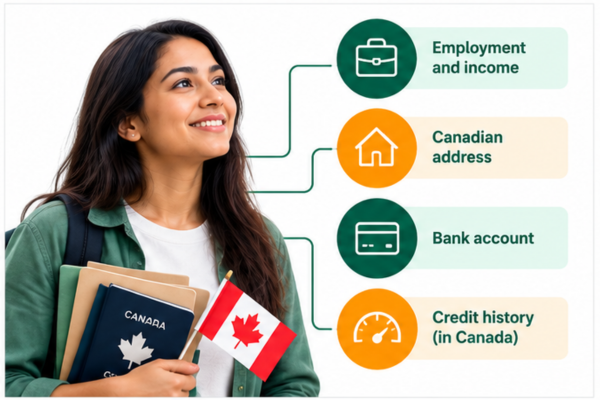
Income and employment
A lender will usually want to establish that you have sufficient income to make the proposed loan payments.
Depending on the lender, you may be asked for documents such as:
- recent pay stubs
- employment information
- bank statements
- other evidence of regular income
Having a job doesn’t guarantee loan approval. The lender will also consider whether the proposed repayment is affordable alongside your other financial commitments.
Existing debt
If you already have credit cards, vehicle finance or other debts in Canada, the lender may consider those obligations.
The more of your income that is already committed to debt repayments, the less room there may be in your budget for another payment.
Canadian banking history
Some lenders may review banking information as part of their assessment.
This can help verify income and provide information about your financial position.
Credit history
If you have already started establishing Canadian credit, the lender may check your credit report.
A short credit history isn’t automatically a bad credit history. It simply provides less information than a well-established file.
Residency and immigration status
Eligibility can also depend on lender requirements relating to residency.
A lender may have different requirements for Canadian citizens, permanent residents and people in Canada under temporary work or study permits.
Don’t assume that being a newcomer automatically makes you eligible or ineligible. Check the lender’s residency requirements before applying.
What Documents Might a Newcomer Need?
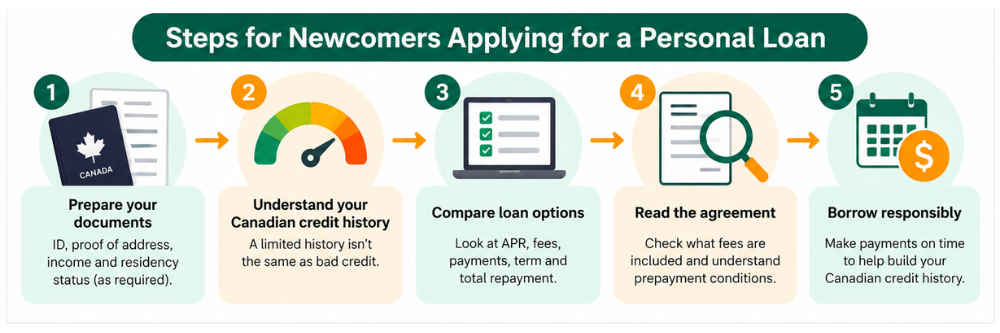
Requirements vary, but you may be asked to provide information that confirms your identity, Canadian address, income and banking details.
This could include:
| Information | Examples |
|---|---|
| Identity | Accepted government-issued identification |
| Address | Lease, utility statement or other accepted proof |
| Income | Pay stubs, bank statements or employment information |
| Banking | Active Canadian bank account information |
| Residency | Documents accepted by the lender to confirm your status |
Don’t send sensitive documents to a lender until you’ve confirmed who you’re dealing with and why the information is required.
If you’re applying online, make sure you’re using the lender’s legitimate website and understand how your personal information will be used.
Where Can Newcomers Look for Personal Loans?
There isn’t one type of lender that will suit every newcomer.
Banks and credit unions
If you already have a Canadian bank account, it can be worth checking what borrowing products your financial institution offers and what eligibility requirements apply.
Some financial institutions also have products or banking packages aimed specifically at newcomers.
Online and alternative lenders
Online lenders may use different eligibility criteria from traditional banks.
Some consider income, affordability and banking information alongside credit history.
If you’d prefer to compare digital borrowing options, our guide to online loans in Canada explains how online applications, eligibility checks and funding generally work. FatCat Loans’ lender network includes providers serving different credit profiles, including borrowers with limited credit history.
Loan-matching services
Instead of approaching lenders individually, a loan-matching service may allow you to submit your details once and see whether participating lenders have suitable options.
FatCat Loans is a loan-matching service rather than a lender. You can review our Canadian lender network to understand the types of lenders and loan products available through our network.
Being matched with a lender doesn’t guarantee approval. The lender makes the final decision and determines the amount, APR, repayment term and other conditions of any offer.
What If You Have No Canadian Credit Score Yet?
Don’t panic and don’t assume you need to apply for the first expensive loan you can find.
If borrowing isn’t urgent, establishing some Canadian credit history before applying for a larger personal loan may give lenders more information to assess.
One option may be a secured credit card.
FCAC specifically identifies secured credit cards as a possible option for newcomers to Canada who don’t yet have a credit history. With a secured card, you provide a security deposit to the card issuer.
Other steps that can help establish a credit file include:
- opening appropriate credit accounts that report to a Canadian credit bureau
- making payments by their due dates
- keeping balances manageable
- checking your credit reports for accuracy
- avoiding unnecessary applications for multiple credit products
You can also read our guide to credit builder loans in Canada if you’re considering a product specifically intended to help establish or rebuild credit history.
Remember that no legitimate product can guarantee a particular increase in your credit score.
Can Newcomers Get Loans With Bad Credit?
A newcomer can have limited credit, bad credit, or both — but these are different situations.
If you’ve already established Canadian credit and your history contains missed payments or other negative information, lenders may treat your application differently from someone who simply has a new or thin credit file.
Some lenders specialize in borrowers with weaker credit profiles. You can learn more about bad credit loans in Canada and the factors these lenders may consider.
However, easier eligibility doesn’t automatically mean a loan is affordable.
Always compare the full borrowing cost before accepting an offer.
Could a Guarantor or Co-Signer Help?
Some lenders may allow another person to support a loan application as a guarantor or co-signer.
This can potentially give a lender additional reassurance where the applicant has limited credit history, but it creates a significant financial responsibility for the other person.
Depending on the agreement, a co-signer or guarantor could become responsible for repayment if the borrower doesn’t pay as required.
Don’t ask someone to co-sign simply as a way to “get approved.” Both people should understand the agreement, potential effect on their finances and exactly what they are legally agreeing to.
How Much Will a Newcomer Pay for a Personal Loan?
There isn’t a special universal “newcomer interest rate.”
The rate and terms you’re offered can depend on the lender and your overall application, including your income, debts, credit profile, loan amount and repayment term.
When comparing loans, look beyond the advertised interest rate.
Check:
- APR
- applicable fees
- regular payment
- number of payments
- repayment term
- total repayment
- prepayment conditions
- charges for late or missed payments
A smaller monthly payment isn’t automatically cheaper if it means repaying the loan for considerably longer.
If you want to understand these figures in more detail, read our guide on how to calculate the true cost of a loan in Canada.
Be Careful With “Guaranteed Approval” Newcomer Loans
Be cautious of advertising that suggests your newcomer status guarantees approval.
A legitimate lender still needs to determine whether it is willing to lend and under what conditions.
Warning signs can include:
- guaranteed approval regardless of your circumstances
- pressure to act immediately
- unclear APR or repayment terms
- unexpected requests for money before receiving the loan
- requests to send money using unusual payment methods
- a lender that is difficult to identify or verify
Being new to Canada’s financial system can make unfamiliar terminology and lending practices harder to assess. Take time to verify the lender and read the agreement before providing money or sensitive personal information.
How to Compare Personal Loans as a Newcomer
If you receive more than one loan offer, compare the important details side by side rather than focusing only on the advertised rate.
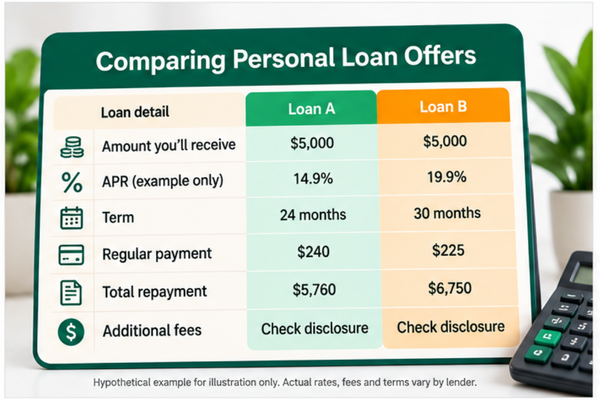
| What to compare | Loan A | Loan B |
|---|---|---|
| Amount you’ll receive | $5,000 | $5,000 |
| APR | 14.9% | 19.9% |
| Regular payment | $240 | $225 |
| Number of payments | 24 | 30 |
| Total scheduled repayment | $5,760 | $6,750 |
| Additional fees | Check disclosure | Check disclosure |
| Prepayment conditions | Check agreement | Check agreement |
Hypothetical example for illustration only. The figures above are designed to demonstrate how loan offers can differ and do not represent an actual lender or loan product.
In this example, Loan B has the lower regular payment, but its scheduled repayments total $990 more than Loan A. That’s because the repayments continue for six months longer.
This shows why a lower payment doesn’t necessarily mean a lower overall borrowing cost.
When comparing your actual offers, check the APR, applicable fees, payment amount, number of payments, total repayment and prepayment conditions in each lender’s disclosure.
Then ask yourself whether the repayment fits your budget after housing, food, transportation, utilities and other essential expenses.
Getting approved isn’t the same thing as being able to comfortably afford the loan.
What Should You Do If You’re Declined?
A declined application doesn’t mean you’ll never qualify for credit in Canada.
It may mean that the particular lender isn’t comfortable with your current financial profile or that you don’t meet one of its eligibility requirements.
Before immediately submitting applications elsewhere:
- Check whether the lender can tell you why the application wasn’t successful.
- Review your Canadian credit reports for errors.
- Check whether the amount you requested was realistic for your income.
- Consider whether waiting and establishing more Canadian credit history would help.
- Compare eligibility requirements before making another application.
Repeatedly applying for credit may result in multiple inquiries on your Canadian credit report, so check a lender’s eligibility requirements before applying.
Building Your Canadian Credit History Takes Time
You don’t need to borrow a large amount simply to establish a credit history.
FCAC explains that credit reports record how you manage credit accounts and whether payments are made on time. Positive information about accounts that are paid as agreed can remain on Canadian credit reports for years.
Start with credit you actually need and can comfortably manage.
Pay bills and credit obligations by their due dates, keep track of your accounts and periodically check your Canadian credit reports for accuracy.
The goal isn’t to build credit as quickly as possible. It’s to establish a reliable record of managing credit over time.
The Bottom Line
Getting a personal loan as a newcomer to Canada may be possible even if you haven’t yet established a long Canadian credit history.
The important distinction is that limited credit history isn’t automatically bad credit.
Lenders may consider your Canadian credit file together with your income, existing debts, banking information, residency requirements and ability to repay. Requirements vary, so compare eligibility criteria before applying and review the complete cost of any offer before accepting it.
If you decide that borrowing is appropriate for your circumstances, you can compare lenders in the FatCat Loans network and review the terms offered to you before deciding whether to proceed.
FatCat Loans is a Canadian loan-matching service, not a lender or financial advisor. Loan availability, approval criteria, rates and terms vary by lender and province. Information in this article is general and does not constitute financial advice.
Frequently Asked Questions
Can a newcomer to Canada get a personal loan?
Potentially. Eligibility varies by lender. A lender may consider your income, existing debts, Canadian credit history, banking information, residency status and ability to afford the repayments. Having limited Canadian credit history doesn’t automatically mean you have bad credit.
Can I get a personal loan in Canada without a Canadian credit history?
Some lenders may consider applicants with limited Canadian credit history, but approval isn’t guaranteed. Lenders may assess other information such as income, employment, debts and banking history. Requirements vary by lender.
Does my credit history from another country count in Canada?
Not necessarily. Canadian credit bureaus collect information about your credit activity in Canada. However, FCAC notes that some lenders may look at credit history from another country and may ask you to provide your foreign credit report. You may still need to establish a Canadian credit history after arriving.
What documents do newcomers need to apply for a loan?
Requirements vary, but lenders may ask for accepted identification, proof of Canadian address, proof of regular income, bank account information and documents confirming residency status. Check the lender’s requirements before applying.
Is no Canadian credit the same as bad credit?
No. Having no or limited Canadian credit history generally means there isn’t much information in your Canadian credit file. Bad credit generally reflects a history containing information that may concern lenders, such as missed payments. FCAC explains that your credit report records how you’ve used credit and whether you make payments as agreed.
How can a newcomer start building credit in Canada?
Options may include using an appropriate credit product that reports to a Canadian credit bureau and making payments on time. FCAC specifically notes that a secured credit card may be an option for newcomers who have no Canadian credit history.

The FatCat Loans Editorial Team delivers clear, accurate, and unbiased guidance on loans, credit, and personal finance in Canada. Our writers follow strict editorial standards to ensure every article is trustworthy, well-researched, and easy to understand, helping readers make confident financial decisions.