How to Identify a Licensed Lender in Canada by Province
November 24, 2026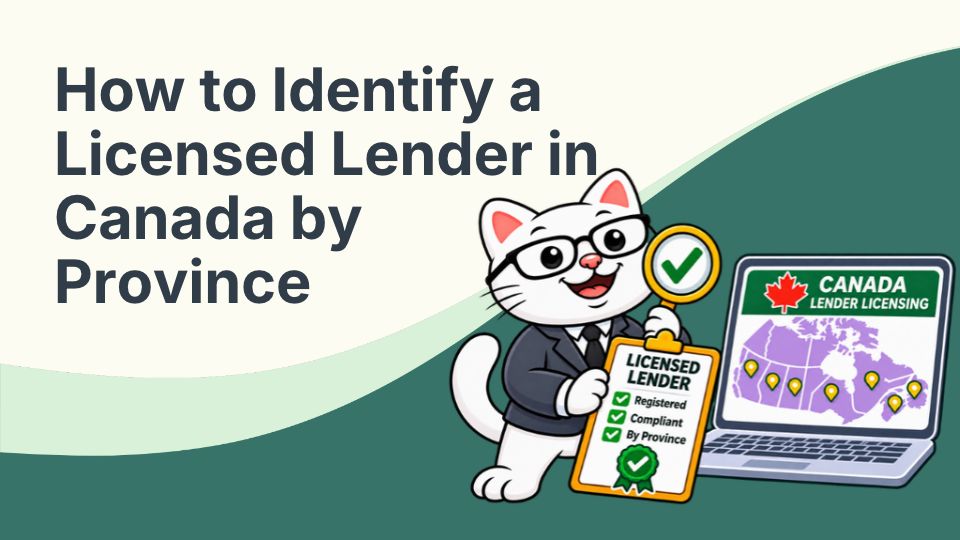
How to Check if a Lender Is Licensed in Canada
Last Updated: November 2026
To check if a lender is licensed in Canada, identify its legal business name, determine the type of loan it offers and search the relevant provincial licensing register or federal regulatory directory.
Canada does not have a single licensing register for all lenders. The requirements depend on the type of lender, the credit product and the province where the loan is offered.
Knowing how to verify a lender can help protect you from fraud, misleading loan offers and unlawful lending practices.
This guide explains how to identify a licensed lender in Canada, where to check its regulatory status in each province and what warning signs to watch for before borrowing.
For a broader explanation of lending laws and consumer protections, read our guide to Canadian borrower rights.
Do All Lenders in Canada Need a Licence?
Not every lender in Canada needs the same type of licence.
The requirements depend on the type of financial institution, the credit product being offered and where the lender conducts business.
For example, a federally regulated bank operates under a different regulatory framework from a provincial payday lender.
An alternative personal loan provider may also face different licensing requirements depending on the province and the cost of its loans.
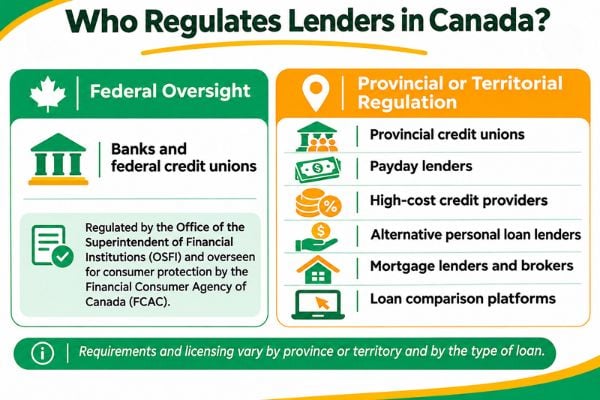
Who Regulates Different Types of Lenders?
| Lender type | Regulatory oversight |
|---|---|
| Banks and federal credit unions | Federal regulation |
| Provincial credit unions | Provincial regulation |
| Payday lenders | Provincial licensing where applicable |
| High-cost credit providers | Specific provincial requirements in certain provinces |
| Alternative personal loan lenders | Requirements vary by province and product |
| Mortgage lenders and brokers | Federal or provincial regulation, depending on the institution and activities |
| Loan comparison platforms | Requirements depend on services, activities and jurisdiction |
The Office of the Superintendent of Financial Institutions (OSFI) supervises federally regulated financial institutions. The Financial Consumer Agency of Canada (FCAC) oversees their compliance with federal consumer protection requirements.
Provincial authorities regulate various other lending activities and enforce applicable consumer protection laws.
Important: A company being registered as a business does not automatically mean it holds every licence or registration required to offer loans.
Where to Check Lender Licences by Province
The following table identifies the main provincial consumer authorities and official resources that can help you verify a lender.
| Province | Regulatory or consumer authority | Where to check |
|---|---|---|
| Ontario | Consumer Protection Ontario | Business licence search |
| British Columbia | Consumer Protection BC | Check a licence |
| Alberta | Service Alberta | Payday lending and licence information |
| Quebec | Office de la protection du consommateur (OPC) | Search for a merchant or lender permit |
| Manitoba | Consumer Protection Office | Consumer Protection Office – Payday loan information |
| Saskatchewan | Financial and Consumer Affairs Authority (FCAA) | Payday lender directory |
| New Brunswick | Financial and Consumer Services Commission (FCNB) | Payday lender licence search |
| Nova Scotia | Service Nova Scotia | Licensed payday lenders in Nova Scotia |
| Prince Edward Island | Consumer Services | PEI government |
| Newfoundland and Labrador | Provincial consumer affairs authority | High-cost credit regulations in Newfoundland and Labrador |
Many provincial lending registers focus on payday lenders, high-cost credit providers or other specifically regulated lending activities.
If you are applying for a standard personal loan, the lender may be subject to different requirements. Not appearing in a payday lender directory does not automatically mean a personal loan provider is operating illegally.
If you are unsure which licence or registration is required, contact the relevant provincial regulator before borrowing.
How to Identify a Licensed Lender in Each Canadian Province
Ontario
Payday lenders and payday loan brokers operating in Ontario must meet provincial licensing requirements.
This includes businesses offering payday loans online.
You can search Ontario’s official business licence directory using the company’s name, licence number or other available business details.
Select the payday lender or loan broker category when conducting your search.
For ordinary personal loans, different requirements may apply. Do not assume that a personal loan provider is operating illegally simply because it does not appear in the payday lender directory.
British Columbia
Consumer Protection BC provides an online licence search covering several regulated industries, including payday lending and high-cost credit.
Search using the lender’s business name or licence details.
The register may display:
- Legal business name.
- Trading name.
- Licence number.
- Business address.
- Licence expiry date.
- Current licence status.
Pay particular attention to the status. An expired or non-renewed licence is not the same as a current licence.
Alberta
Alberta requires payday lenders and businesses covered by its high-cost credit regulations to hold the appropriate provincial licence.
These requirements can also apply to businesses operating online.
The Alberta government provides information about payday lending and access to its business licence verification service.
Check that the company holds the correct licence for the product it is offering, rather than simply confirming that it holds a business licence of some kind.
Online payday lenders serving Alberta borrowers must prominently display a copy of their provincial licence on or near their introductory webpage. You can independently verify the licence through Alberta’s business licence search tool.
Quebec
Quebec has specific permit requirements for many money lenders and merchants offering high-cost credit.
The Office de la protection du consommateur provides a merchant information search that consumers can use to investigate a lender’s permit status.
Depending on the credit product, a lender may need both a money lender’s permit and a high-cost credit permit.
Certain financial institutions and credit arrangements are exempt from these requirements.
Quebec does not operate under the same payday lending framework as most other Canadian provinces.
Manitoba
Manitoba regulates payday lending through its Consumer Protection Office.
Before accepting a payday loan, confirm that the business holds the required authorization to operate in Manitoba.
Visit the provincial government’s consumer protection resources or contact the Consumer Protection Office for assistance.
For other personal loan products, ask which regulatory or licensing requirements apply.
Saskatchewan
The Financial and Consumer Affairs Authority regulates payday lending in Saskatchewan.
Its requirements can apply to physical lending locations and businesses offering payday loans to Saskatchewan borrowers over the internet.
The FCAA website provides a list of authorized payday lenders and information about regulatory actions.
Check the lender’s identity and confirm that its authorization covers the way it is offering the loan.
New Brunswick
The Financial and Consumer Services Commission regulates several lending-related activities in New Brunswick.
Payday lenders serving New Brunswick residents must be licensed, including online lenders operating from outside the province.
Registration requirements also apply to certain credit providers, brokers and businesses arranging consumer credit.
Use FCNB’s official resources to check the relevant licence or registration.
Nova Scotia
Payday lenders operating in Nova Scotia are subject to provincial licensing requirements.
Service Nova Scotia provides consumer protection and licensing information.
Visit the provincial government’s website or contact the relevant consumer affairs office to confirm whether a lender holds the required licence.
Prince Edward Island
Payday lending in Prince Edward Island is subject to provincial consumer protection and licensing requirements.
Borrowers can contact Consumer Services to confirm the licensing status of a payday loan provider.
This is particularly important when dealing with an online lender whose business address is outside the province.
Newfoundland and Labrador
Newfoundland and Labrador regulates payday lenders and high-cost credit providers under its provincial consumer protection framework.
Since June 2024, businesses covered by the province’s high-cost credit regulations have also been required to hold the appropriate licence.
Before borrowing, contact the Consumer and Financial Services Division to confirm whether the lender holds the required authorization.
Always verify the legal business name, particularly when a lender operates under a different website or brand name.
What About Canada’s Territories?
Yukon, the Northwest Territories and Nunavut do not have the same specific payday lending regimes as the nine provinces with payday loan regulations.
Other consumer protection laws and federal lending restrictions may still apply.
Borrowers in these territories should contact their local consumer affairs office to determine which requirements apply to a particular loan provider.
The federal government’s provincial and territorial payday lending resource directory can help you locate the appropriate authority.
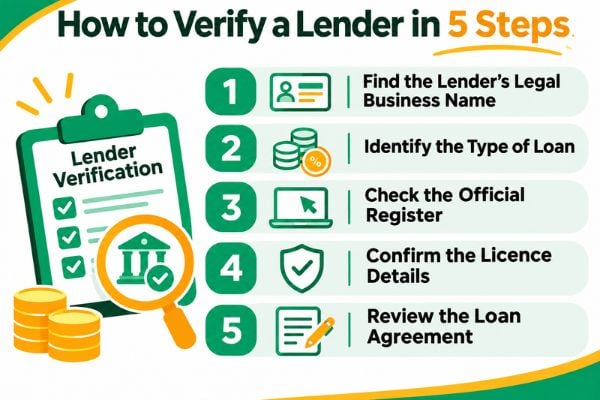
How to Verify a Lender in Canada: 5 Steps
You should not rely solely on information displayed on a lender’s website.
Follow these five steps before submitting a loan application or accepting an offer.
Step 1: Find the Lender’s Legal Business Name
A lender’s website name may differ from its registered company name.
Look for the legal business name in its website footer, terms and conditions, privacy policy or loan agreement.
Knowing the correct company name makes it easier to search official records.
Step 2: Identify the Type of Loan
Determine whether the company is offering a personal loan, payday loan, high-cost credit product or another form of financing.
Different loan products may require different licences or registrations.
The appropriate authority can help if you are unsure which category applies.
Step 3: Check the Official Register
Visit the relevant provincial authority’s website and search for the lender.
For federally regulated financial institutions, consult the OSFI financial institution resources.
Always access the register independently rather than relying on a link supplied in an unexpected email or text message.
Step 4: Confirm the Licence Details
Where a licence or registration is required, check:
- Whether the authorization is current.
- Whether the legal business name matches.
- Whether the licence covers the relevant lending activity.
- Whether the business is authorized to operate in your province.
- Whether any relevant restrictions or enforcement notices apply.
Fraudsters sometimes copy the licence details of legitimate businesses, so a licence number alone is not enough.
Compare the lender’s website address, telephone number and business contact details with independently verified information. If anything does not match, contact the regulator or the legitimate company directly before sharing personal information.
Step 5: Review the Loan Agreement
Even if the lender is properly authorized, review the complete loan agreement before signing.
Check the interest rate, APR where applicable, additional fees, repayment term and total borrowing cost.
A valid licence does not guarantee that a loan is affordable or suitable for your circumstances.
Are Online Lenders Required to Be Licensed in Canada?
Online lending is subject to applicable Canadian lending and consumer protection laws.
Operating through a website does not automatically exempt a company from provincial requirements.
For example, an online payday lender serving Ontario or New Brunswick borrowers generally needs the appropriate licence for that jurisdiction.
A licence issued in one province does not automatically authorize every regulated lending activity across Canada.
When researching online loans in Canada, verify the actual loan provider and the requirements that apply where you are borrowing.
What About Loan Brokers and Comparison Websites?
Loan comparison platforms and brokers may help connect borrowers with potential lenders without providing the funds directly.
Their regulatory obligations depend on the activities they perform, the loan products involved and applicable provincial laws.
FatCat Loans is a loan-matching platform, not a direct lender.
Borrowers can explore potential loan options through our Canadian lender network. Before accepting an offer, confirm the identity of the actual lender and review its terms and applicable regulatory status.
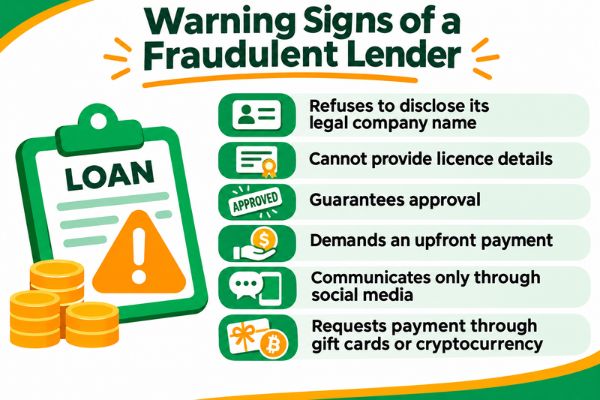
Warning Signs of an Unlicensed or Fraudulent Lender
A professional-looking website does not necessarily mean a lender is legitimate.
Be cautious if a loan provider:
- Refuses to disclose its legal company name.
- Cannot provide licence details where a licence is required.
- Provides a licence number belonging to another company.
- Guarantees approval regardless of financial circumstances.
- Demands an unexpected upfront payment to release loan funds.
- Communicates only through social media or messaging apps.
- Pressures you to sign immediately.
- Refuses to provide a written loan agreement.
- Requests payment through gift cards or cryptocurrency.
Not every warning sign proves that a company is operating illegally, but it should prompt further investigation.
Do not send money or sensitive personal information until you are satisfied that the business is genuine.
For more information on common lending scams and how to protect your personal information, read our guide to identifying and avoiding loan scams in Canada.
Does a Lender Licence Guarantee a Safe Loan?
No. Licensing helps establish whether a business holds the authorization required for certain activities, but it does not guarantee a positive borrowing experience.
A licensed lender may still offer expensive credit, charge permitted fees or reject your application.
Before accepting a loan, consider:
- The lender’s reputation and regulatory history.
- The interest rate and APR.
- The total repayment amount.
- Applicable fees and charges.
- Whether repayments fit your budget.
Even when comparing personal loans in Canada from properly authorized lenders, affordability should remain a priority.
Ready to Compare Loan Options?
If you have reviewed your budget and decided that borrowing is appropriate, explore potential loan offers through FatCat Loans.
Compare lender requirements, borrowing costs and repayment terms before accepting an agreement.

What to Do If You Cannot Verify a Lender’s Licence
If you cannot find a lender in an official register, do not automatically assume that it is operating illegally.
First, check whether you have the correct legal business name and whether the type of loan requires that particular licence.
Contact the appropriate regulator or consumer authority if you are still unsure.
If you suspect the company is fraudulent or operating without required authorization:
- Stop sharing personal and financial information.
- Do not send money to release promised loan funds.
- Keep copies of communications and advertisements.
- Report the business to the relevant consumer protection authority.
- Report suspected fraud to the Canadian Anti-Fraud Centre.
- Contact your bank immediately if you have shared sensitive banking information or transferred money.
If you already have a loan with the company, seek appropriate guidance before changing or stopping repayments. A licensing concern does not automatically cancel your debt obligations.
Frequently Asked Questions About Licensed Lenders in Canada
How do I check if a lender is licensed in Canada?
Identify the lender’s legal business name and the type of loan it offers. Search the appropriate provincial licensing register or federal regulatory resources. Contact the relevant authority if you cannot confirm its status.
Do all personal loan lenders need a licence in Canada?
No. Canada does not have one universal licence for every personal loan provider. Licensing, registration and regulatory requirements depend on the type of financial institution, loan product and jurisdiction.
Are online payday lenders required to be licensed?
Online payday lenders must meet applicable provincial licensing requirements. Operating online or from another province does not automatically exempt a lender from these obligations.
Can a lender operate in more than one Canadian province?
Yes. However, lenders must comply with the applicable requirements in each jurisdiction where they conduct regulated lending activities. Additional provincial licences or registrations may be required.
Is a registered business the same as a licensed lender?
No. Business registration establishes a company’s business identity or registration status. It does not automatically confirm that the company holds the authorization required for a particular lending activity.
What should I do if a lender will not provide its licence number?
If a licence is required, contact the appropriate regulator to verify the lender’s authorization. Avoid borrowing or sharing sensitive information until you have confirmed the company’s identity and applicable regulatory status.
Final Thoughts: Always Verify Before You Borrow
Checking whether a lender is properly licensed or regulated is an important part of responsible borrowing.
Canada’s lending requirements vary between provinces and loan products, so there is no single register that covers every lender.
Start by identifying the company, understanding the type of loan being offered and checking the appropriate official resources.
Remember that regulatory authorization is only one part of choosing a lender. You should also understand the full borrowing cost, repayment obligations and potential financial risks.
Taking a few minutes to verify a lender before applying could help you avoid unnecessary financial problems later.
Sources and Further Reading
- Financial Consumer Agency of Canada – Payday Loans
- Office of Consumer Affairs – Provincial and Territorial Payday Lending Resources
- Office of the Superintendent of Financial Institutions – Financial Institutions
- Office de la protection du consommateur – High-Cost Credit Consumer Tips
Editorial disclosure: FatCat Loans is a loan-matching platform, not a direct lender or regulatory authority. We may receive compensation from participating lenders.
Legal disclaimer: This article provides general educational information and does not constitute legal advice. Licensing requirements, regulations and government resources may change. Always confirm current requirements with the relevant authority.

The FatCat Loans Editorial Team delivers clear, accurate, and unbiased guidance on loans, credit, and personal finance in Canada. Our writers follow strict editorial standards to ensure every article is trustworthy, well-researched, and easy to understand, helping readers make confident financial decisions.