Bad Credit Loans in Canada – Complete Borrower’s Guide 2026
November 18, 2025
Bad credit loans in Canada are designed for borrowers with lower credit scores, but approval is never guaranteed. Lenders typically focus on income stability, banking history, and affordability rather than credit score alone. Common options include installment loans and online loans in Canada, each with different costs and repayment terms.
Understanding Bad Credit Loans Canada
Updated June 2026
Last reviewed: June 2026
If you have a low credit score, past late payments, or limited credit history, getting approved for a traditional bank loan can be challenging. That’s why bad credit loans Canada have become an essential alternative for borrowers who need fast, secure access to funds.
In 2026, many licensed lenders offer flexible approval requirements, online applications, and same-day decisions—making it easier for Canadians with imperfect credit to get money for emergencies, bills, car repairs, medical expenses, or debt consolidation.
This guide explains everything you need to know about bad credit loans in Canada, including approval criteria, loan types, rates, provincial rules, alternatives, scam warnings, and tips for improving your credit.
Whether you’re dealing with an unexpected expense, consolidating existing debt, repairing your vehicle, or simply looking for borrowing options after being declined by a bank, understanding how bad credit loans work can help you make more informed financial decisions.
In this guide, you’ll learn how lenders assess applications, what interest rates you can expect, how to compare loan offers, how to avoid common borrowing mistakes, and what alternatives may be available before you borrow.
To explore personalised options, visit our dedicated page on bad credit loans Canada.
Bad Credit Loans Canada at a Glance
- Typical loan amounts: $500–$50,000
- Funding: As fast as the same business day with some lenders
- Repayment terms: Usually 6–60 months
- Best for: Borrowers with poor or limited credit history
- Approval factors: Income, employment, banking history and affordability
Who This Guide Is For
This guide is designed for Canadians who have poor credit, limited credit history, past collections, consumer proposals, or previous bankruptcies and want to understand their borrowing options in 2026.
Whether you need funds for an emergency expense, debt consolidation, vehicle repairs, or unexpected bills, this guide explains how bad credit loans work, what lenders look for, and how to compare your options safely.
Editorial Standards
This guide is reviewed regularly to reflect current Canadian lending regulations, publicly available government guidance, and information provided by licensed lenders. While every effort is made to keep this information accurate and up to date, loan products, eligibility requirements, interest rates, and provincial regulations may change over time.
Contents
- What Are Bad Credit Loans?
- What Credit Score Is Considered Bad?
- Why Canadians End Up With Bad Credit
- Types of Bad Credit Loans
- Compare Bad Credit Loan Options
- How Much Can You Borrow?
- How to Compare Lenders
- Loan Costs & Interest Rates
- How Approval Works
- Provincial Rules
- Alternatives to Bad Credit Loans
- Common Borrowing Mistakes
- How to Improve Your Credit Score
- Frequently Asked Questions
What Are Bad Credit Loans Canada?
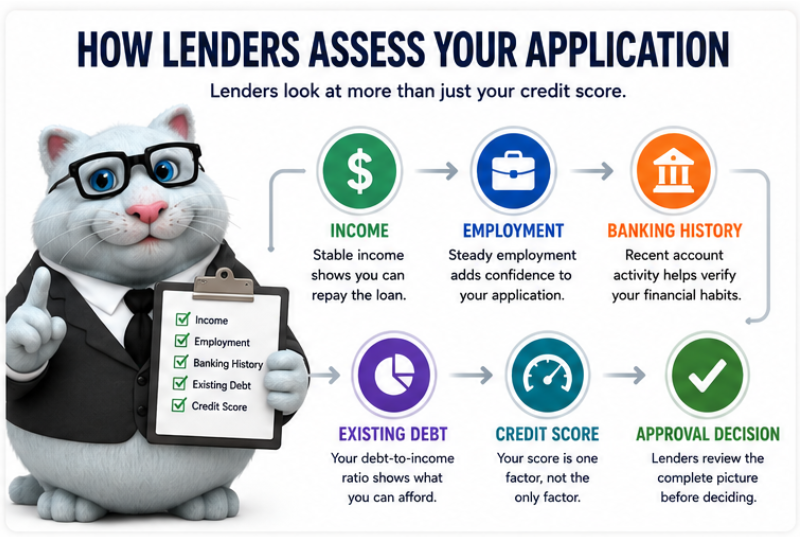
Bad credit loans are personal installment loans designed for Canadians who don’t qualify with banks or credit unions. Instead of focusing only on credit scores, lenders evaluate:
- Income stability
- Employment history
- Recent banking activity
- Debt-to-income ratio
- Identity and residency
- Ability to repay
What Credit Score Is Considered Bad In Canada?
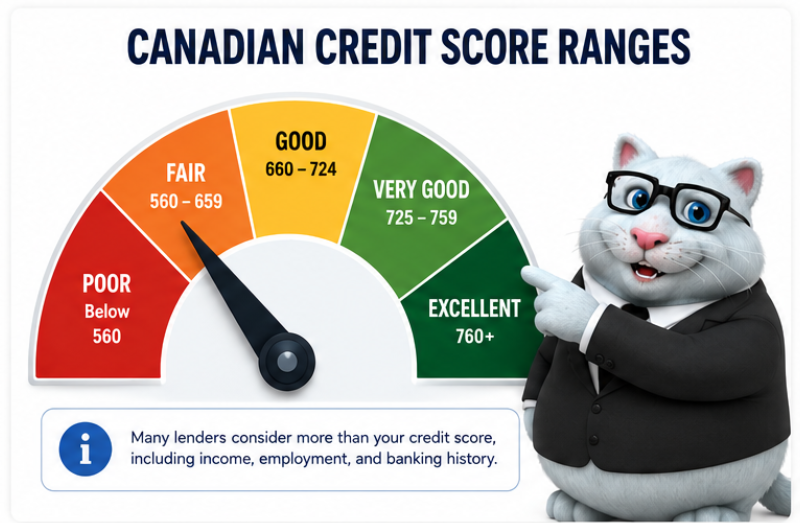
Many borrowers assume they cannot qualify for a loan simply because they have a low credit score. In reality, alternative lenders often evaluate income and affordability alongside credit history.
| Credit Score | Rating |
|---|---|
| 760+ | Excellent |
| 725–759 | Very Good |
| 660–724 | Good |
| 560–659 | Fair |
| Below 560 | Poor |
Credit scores are calculated by Equifax and TransUnion and may vary slightly between reporting agencies.
While your credit score is important, many alternative lenders also consider your current income, employment stability, recent banking history, and ability to comfortably repay the loan.
If you’re working to improve your score, read our guide on improving your credit score in Canada.
These loans differ from short-term, lump-sum products by offering predictable installment payments spread over several months rather than a single repayment.
Borrowers choose these loans for:
- Fast online approvals
- Flexible qualification criteria
- Fixed interest rates
- Transparent repayment terms
- No long paperwork
If you want to understand how online lenders assess borrowers, you can also read our Online Loans Canada guide.
Why Canadians End Up With Bad Credit
Bad credit does not always result from irresponsible borrowing. Many Canadians experience credit challenges because of life events outside their control.
- Job loss
- Reduced income
- Divorce or separation
- Medical expenses
- Missed payments
- High credit card balances
- Collections accounts
- Consumer proposals
- Bankruptcy
Understanding why your credit score declined can help you choose the right borrowing strategy moving forward.
Types of Bad Credit Loans Canada Available (2026)
1. Bad Credit Personal Loans
These are the most common option among alternative lenders. Borrowers can access:
- Loan amounts from $500 to $50,000
- Repayment terms of 6 to 60 months
- Fixed monthly payments
For a broader overview of borrowing options, see our Personal Loans Canada guide.
2. No Credit Check Loans
Some lenders offer loans without a hard credit check. Approval is based on:
- Proof of income
- Bank statements
- Affordability
- Canadian residency
These loans typically have higher interest rates but can benefit borrowers with very low credit scores.
3. Secured Bad Credit Loans
Borrowers can provide collateral—such as a vehicle or savings—to receive better rates.
Pros:
- Lower interest
- Higher loan amounts
- Higher approval chances
Cons:
- Risk of losing your asset if you default
4. Co-Signer Loans
A co-signer with strong credit can help a borrower secure a larger loan and lower rate.
Best for borrowers who:
- Have stable income
- Have a trusted co-signer
- Want better repayment terms
5. Bad Credit Car Loans
These loans are designed specifically for financing a vehicle.
To learn more about auto financing options, read our guide to bad credit car loans Canada.
Can You Get A Loan With A Consumer Proposal?
Yes. Some alternative lenders will approve borrowers who are currently in a consumer proposal, although loan amounts and interest rates may be more restrictive.
Lenders typically focus on:
- Current income stability
- Length of employment
- Recent banking history
- Remaining obligations under the proposal
Borrowers who have completed a consumer proposal often have access to more lending options as they rebuild their credit profile.
Can You Get A Loan After Bankruptcy?
Loan approval after bankruptcy is possible, particularly after discharge. Many lenders place greater emphasis on current affordability than past financial difficulties.
Borrowers may improve their chances by:
- Demonstrating stable employment
- Maintaining regular banking activity
- Building positive payment history after discharge
- Applying for realistic loan amounts
Comparison Table: Types of Bad Credit Loans Canada
| Loan Type | Approval Difficulty | APR Range | Loan Amount | Best For |
|---|---|---|---|---|
| Bad Credit Personal Loan | Medium | 19–46% | $500–$50,000 | General expenses, emergencies |
| No Credit Check Loan | Easy | 29–60% | $100–$5,000 | Low or no credit score |
| Secured Loan | Easy | 7–29% | $1,000–$50,000+ | Borrowers with collateral |
| Co-Signer Loan | Medium | 9–25% | $2,000–$40,000 | Borrowers with co-signer |
| Bad Credit Car Loan | Medium | 7–36% | $5,000–$50,000 | Vehicle purchases |
How Much Can You Borrow With Bad Credit?
The amount you qualify for depends on your income, existing debt obligations, banking history, and lender criteria.
| Monthly Income | Potential Loan Range |
|---|---|
| $1,500 | $500–$3,000 |
| $2,500 | $1,000–$8,000 |
| $4,000 | $3,000–$20,000 |
| $6,000+ | $5,000–$50,000+ |
Actual approval amounts vary by lender and individual circumstances.
Borrowing limits are also influenced by your existing debt obligations, monthly housing costs, employment stability, and the lender’s affordability assessment. Applying for an amount that fits comfortably within your budget can improve your chances of approval.
How to Compare Bad Credit Lenders
Before accepting a loan offer, compare:
- APR and total borrowing cost
- Origination or administration fees
- Repayment flexibility
- Early repayment options
- Funding speed
- Provincial licensing
- Customer reviews
The cheapest loan is not always the best option. Consider the total repayment amount and whether the payments fit comfortably within your budget.
How to Choose the Right Bad Credit Loan
Choosing the right loan involves more than finding the fastest approval. Taking time to compare lenders and loan terms can help you reduce borrowing costs and avoid unnecessary financial stress.
Before accepting any loan offer, consider the following:
- Compare the annual percentage rate (APR) rather than focusing only on the monthly payment.
- Review the total repayment amount over the life of the loan.
- Check whether there are administration fees or optional insurance costs.
- Find out whether you can repay the loan early without penalties.
- Read customer reviews and confirm the lender operates legally in your province.
- Borrow only what you need rather than accepting the maximum amount offered.
The best loan is not always the one with the fastest approval—it is the one that best matches your financial needs and repayment ability.
How Much Do Bad Credit Loans Canada Cost in 2026?
Interest rates vary depending on your credit profile, income, banking history, and whether collateral is provided.
Typical APR Ranges:
| Credit Category | Score Range | Expected APR | Notes |
|---|---|---|---|
| Excellent | 720+ | 7–15% | Prime lenders |
| Good | 650–719 | 9–25% | Lower risk |
| Poor | 500–649 | 19–46.9% | Alternative lenders |
| Very Poor | <500 | 29–60% | No-credit-check lenders |
To learn more about loan costs and federal lending rules, visit the Financial Consumer Agency of Canada (FCAC).
Example Loan Costs
| Loan Amount | APR | Term | Monthly Payment | Total Repaid |
|---|---|---|---|---|
| $3,000 | 29.9% | 24 Months | ~$165 | ~$3,960 |
| $10,000 | 19.9% | 48 Months | ~$304 | ~$14,592 |
Examples are illustrative only. Actual rates, payments, and loan terms vary by lender and borrower profile.
Understanding the Cost of Borrowing
Looking only at your monthly payment can be misleading. Always compare the total cost of borrowing over the life of the loan.
| Example | Cost of Borrowing |
|---|---|
| $3,000 loan example | Approximately $960 |
| $10,000 loan example | Approximately $4,592 |
A lower monthly payment may seem attractive, but extending the repayment period often increases the total amount of interest you pay.
How Approvals Work for Bad Credit Loans Canada
Lenders evaluate multiple factors—not just your score.
1. Income Requirements
Most lenders require:
- Monthly income of $1,200–$1,800
- Regular pay deposits
- Bank statements or pay stubs
2. Employment Stability
Stable employment of at least 3–6 months increases approval odds.
3. Debt-to-Income Ratio
If too much of your income goes toward existing debt, you may qualify for lower loan amounts.
4. Banking Activity
Lenders review:
- NSF (insufficient funds) transactions
- Overdrafts
- Bill payment history
5. Credit Check
Some lenders use soft checks; others use full bureau checks.
To understand how lenders issue real-time decisions, see our guide to Instant Approval Loans in Canada.
Warning Signs You May Be Borrowing Too Much
Even if you qualify, that does not mean the loan is affordable.
- Your loan payment would consume a large portion of your monthly income
- You need another loan to repay the first one
- You cannot comfortably cover essential expenses after repayment
- You are borrowing for non-essential spending
Responsible borrowing means choosing a loan amount you can realistically repay without creating additional financial stress.
Provincial Rules for Bad Credit Loans Canada (2026)
Bad credit installment loans must follow federal and provincial regulations.
Ontario
- Licensed lenders must clearly disclose the total cost of borrowing.
- Borrowers must receive a written loan agreement before accepting funds.
- Payday lending rules differ from installment lending regulations.
- Consumer protection laws require transparent disclosure of fees and repayment terms.
- Federal criminal interest rate rules also apply.
British Columbia
- Strong cost-of-borrowing disclosure requirements.
- Clear separation between interest charges and additional fees.
- Cancellation rights may apply depending on the loan product.
- Consumer protection legislation governs lending practices.
- Only licensed lenders should be considered.
Alberta
- Written loan agreements are mandatory.
- Borrowers receive clear disclosure of repayment obligations.
- Certain loan products include rescission periods.
- Consumer protection legislation regulates lending practices.
- Licensed lenders must provide transparent loan documentation.
Quebec
- Quebec has some of Canada’s strictest consumer lending regulations.
- Interest rate limits are generally lower than in many other provinces.
- Many alternative lenders choose not to operate in Quebec.
- Borrowers benefit from strong consumer protection legislation.
- Loan availability may be more limited than elsewhere in Canada.
Pros and Cons of Bad Credit Loans Canada
Pros
- Accessible for borrowers rejected by banks
- Fixed installment payments
- Fast online approvals
- Options available without credit checks
- Can rebuild credit if paid on time
Cons
- Higher interest rates
- Risk of debt if mismanaged
- Must avoid unlicensed lenders
- Not all lenders operate in every province
Who Should Consider a Bad Credit Loan?
Bad credit loans are not the right solution for every borrower. They are generally best suited to Canadians who need access to funds and have a realistic plan to repay the loan.
You may benefit if:
- You have a stable source of income.
- You need funds for an emergency expense.
- You are rebuilding your credit after financial difficulties.
- You need predictable monthly payments through an installment loan.
- You have been declined by a traditional bank but can comfortably afford repayments.
You may want to consider alternatives if:
- You would struggle to make the monthly payments.
- You need to borrow simply to repay existing debt.
- Your borrowing is for discretionary or non-essential spending.
- You have access to lower-cost financing through a credit union or secured loan.
Alternatives to Bad Credit Loans Canada
A bad credit loan may be the right solution for some borrowers, but it should not be the only option you consider. Depending on your financial situation, there may be alternatives that offer lower borrowing costs, less risk, or a better long-term outcome.
Before accepting any loan offer, compare the following alternatives.
1. Credit Union Loans
Many Canadian credit unions take a more flexible approach to lending than traditional banks. Rather than relying solely on your credit score, they may consider your employment history, income stability, and relationship with the institution.
Credit union loans often provide:
- Lower interest rates
- More flexible qualification criteria
- Longer repayment periods
- Personalized financial support
If you have an account with a local credit union, it may be worth exploring their lending options before applying with alternative lenders.
2. Debt Consolidation Loans
If your primary challenge is managing multiple high-interest debts, a debt consolidation loan may be more effective than taking on additional borrowing.
Debt consolidation combines several debts into a single monthly payment, which can simplify repayment and potentially reduce overall interest costs.
Learn more about debt consolidation loans in Canada.
3. Secured Lines of Credit
Borrowers who own a vehicle, have savings, or own property may qualify for a secured line of credit. Because the loan is backed by collateral, lenders often offer lower interest rates and larger borrowing limits.
However, failing to repay a secured loan could result in the loss of the asset used as collateral.
4. Borrowing From Family or Friends
In some situations, family members or close friends may be willing to provide short-term financial assistance. While this option can reduce borrowing costs, it is important to establish clear repayment expectations and document the arrangement in writing.
5. Employer Salary Advances
Some employers offer payroll advances or emergency assistance programs for workers experiencing temporary financial hardship. These advances may provide access to funds without interest charges or formal credit checks.
6. Government Assistance Programs
Canadians experiencing financial hardship may qualify for provincial or federal support programs depending on their circumstances. Assistance may be available for housing, utilities, childcare, disability support, or employment-related challenges.
Exploring available assistance programs can help reduce the need for borrowing altogether.
7. Installment Loans
If borrowing remains necessary, structured installment loan options may provide a more manageable alternative to short-term borrowing products because payments are spread over a fixed repayment schedule.
Which Option Is Best?
The best solution depends on why you need funds and your ability to repay. Borrowers facing a temporary cash shortfall may benefit from short-term financing, while those struggling with multiple debts may achieve better results through consolidation or credit counselling.
Always compare the total cost of borrowing, repayment flexibility, and potential impact on your financial situation before making a decision.
Common Mistakes Borrowers Make
Many financial difficulties occur not because borrowers take out loans, but because they choose the wrong loan or borrow without understanding the full costs involved. Avoiding these common mistakes can help protect both your finances and your credit score.
Applying With Multiple Lenders At Once
Submitting several applications within a short period can result in multiple hard credit inquiries, which may temporarily lower your credit score. Instead, research lenders carefully and apply only where you are likely to qualify.
Borrowing More Than Necessary
It can be tempting to accept the maximum loan amount offered. However, borrowing more than you need increases both monthly payments and total interest costs.
Whenever possible, borrow only what is required to solve the immediate financial need.
Ignoring The Total Cost Of Borrowing
Many borrowers focus only on the monthly payment. A smaller payment may seem attractive, but extending the loan term often increases the total amount repaid over time.
Always review:
- Total repayment amount
- Interest charges
- Additional fees
- Prepayment terms
Missing Payments
Late or missed payments can damage your credit profile and may result in additional fees. Setting up automatic payments or calendar reminders can help ensure repayments are made on time.
Falling For Guaranteed Approval Claims
No legitimate lender can guarantee approval without reviewing basic information about your financial situation. Be cautious of companies advertising “guaranteed approval” or demanding payment before funding.
Not Reading The Loan Agreement
Before accepting any loan, review the agreement carefully. Pay attention to interest rates, repayment schedules, fees, cancellation rights, and any penalties that may apply.
Using Loans For Non-Essential Spending
Bad credit loans are generally best reserved for genuine financial needs such as emergency expenses, vehicle repairs, urgent bills, or debt restructuring. Using borrowed money for discretionary purchases can create unnecessary financial pressure.
Taking New Debt To Repay Existing Debt
Continuously borrowing to cover existing obligations can lead to a cycle of debt. If repayment is becoming difficult, consider exploring debt consolidation, credit counselling, or other financial assistance options instead.
The most successful borrowers focus on affordability first and approval second.
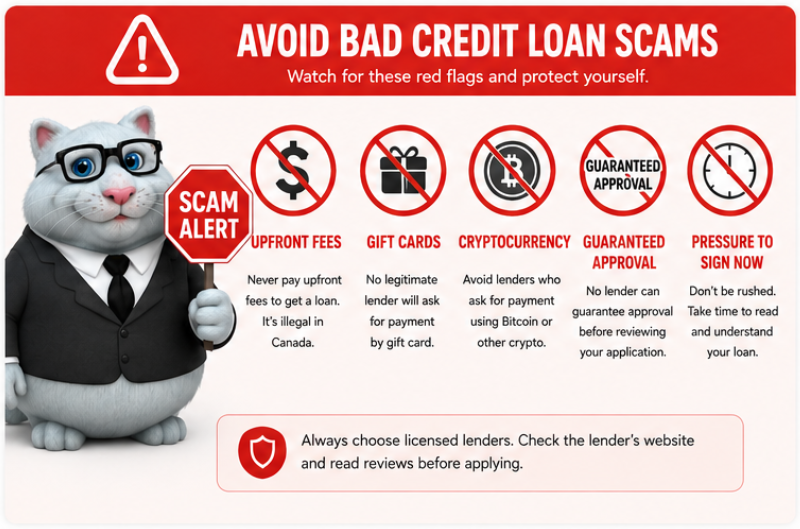
Scam Warning: How to Avoid Bad Credit Loan Fraud
Stay safe by avoiding lenders who:
- Request upfront fees
- Offer “guaranteed approval”
- Ask for gift cards, crypto, or e-transfers
- Operate without a legitimate Canadian address
- Pressure you into signing immediately
Borrow only from licensed Canadian lenders.
Canadian Borrowing Trends in 2026
Rising living costs, inflation, and household debt continue to drive demand for alternative lending solutions across Canada.
According to Statistics Canada, Canadian households continue to carry significant debt relative to disposable income, while higher interest rates have increased borrowing costs for many consumers. As a result, comparing lenders carefully and understanding the total cost of borrowing is more important than ever.
Additional consumer guidance is available through the Financial Consumer Agency of Canada, Statistics Canada, and the Bank of Canada.
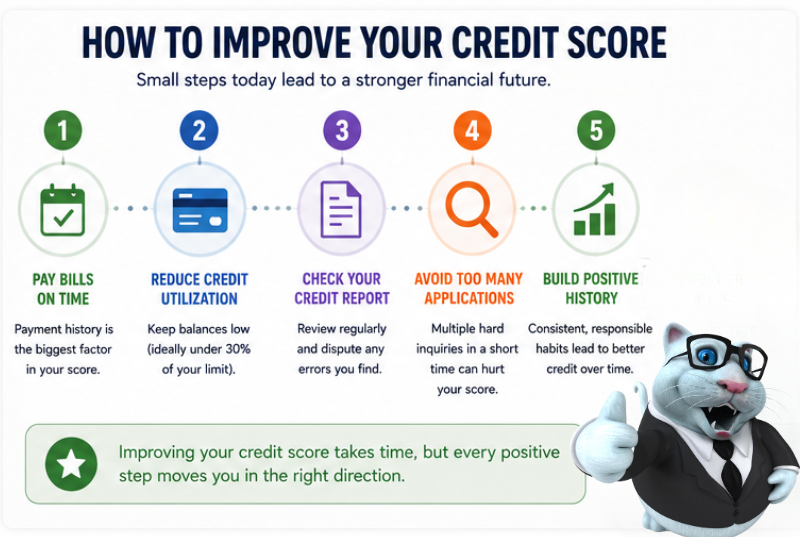
How to Improve Your Credit Score
Improving your credit score will help you qualify for better rates in the future.
Tips include:
- Always pay bills on time
- Reduce credit card balances
- Avoid multiple loan applications
- Check your credit report for errors
- Keep older accounts open to lengthen credit history
Borrowing Responsibly With Bad Credit
Always review total repayment costs and avoid lenders requesting upfront fees. Learn more on the Important Tips page.
How FatCat Loans Helps Borrowers with Bad Credit
FatCat Loans connects Canadians with licensed lenders who specialise in flexible approval requirements for borrowers with imperfect credit. Through a single online application, borrowers can receive personalised loan matches and compare options with transparency.
To explore your loan options, visit our page on bad credit loans Canada.
Frequently Asked Questions
What are bad credit loans Canada?
They are personal installment loans designed for borrowers with low or limited credit history. Approval is based more on income and affordability than credit score.
Can I get bad credit loans Canada without a credit check?
Yes. Some lenders offer no hard credit check loans using income verification and bank statements.
How fast can I get approved?
Many lenders provide instant decisions with funding available within 24–48 hours.
Are bad credit loans Canada safe?
Yes, when borrowing from licensed Canadian lenders with transparent terms and regulated interest rates.
Can a bad credit loan improve my credit score?
Yes. Making on-time payments can help rebuild your credit over time.
What credit score do I need for a bad credit loan?
Many alternative lenders accept borrowers with credit scores below 660. Some lenders focus more heavily on income, employment stability, banking history, and affordability than on credit score alone.
Can I get a bad credit loan if I am self-employed?
Yes. Self-employed Canadians may qualify by providing proof of income through bank statements, tax returns, invoices, or other financial documentation.
Can I get approved while in a consumer proposal?
Some lenders may approve borrowers who are actively participating in a consumer proposal. Approval often depends on income stability and overall affordability.
Can I get a loan after bankruptcy?
Yes. Many borrowers qualify for financing after bankruptcy discharge. Demonstrating consistent income and positive financial habits can improve approval odds.
Will applying for a loan affect my credit score?
Some lenders perform soft credit checks that do not affect your score. Others may conduct a hard inquiry, which can have a small temporary impact. Always ask how your application will be assessed.
Can I repay my loan early?
Many lenders allow early repayment without penalties, although policies vary. Review your loan agreement carefully before signing.
How much can I borrow with bad credit?
Loan amounts typically range from $500 to $50,000 depending on your income, credit profile, existing debt obligations, and lender requirements.
How quickly can I receive funds?
Many online lenders provide decisions within minutes and funding within one business day. Processing times vary by lender and banking institution.
Do bad credit loans help build credit?
If your lender reports payment activity to a credit bureau, making on-time payments may help strengthen your credit profile over time.
Are no-credit-check loans safe?
They can be, provided the lender is licensed and transparent about costs. Always review the total borrowing cost and verify the lender’s legitimacy before accepting funds.
Can I qualify if I receive government benefits?
Some lenders accept government benefits as part of a borrower’s income profile. Eligibility requirements vary by lender and province.
What documents are usually required?
Most lenders require government-issued identification, proof of income, proof of address, and an active Canadian bank account.
Are bad credit loans available in every province?
Availability depends on provincial regulations and lender licensing. Not all lenders operate in every province, particularly Quebec, where lending regulations are more restrictive.
How can I improve my chances of approval?
You may improve approval odds by maintaining stable employment, reducing existing debt, avoiding NSF transactions, and applying for an amount that matches your income and budget.
Are bad credit loans Canada worth it?
For borrowers who need access to funds and cannot qualify through traditional banks, bad credit loans can provide a valuable financial solution. The key is to compare lenders carefully, borrow only what you need, and ensure repayments fit comfortably within your budget.
Final Thoughts
Bad credit loans Canada provide essential financial access for Canadians who may not qualify through traditional lending channels. By understanding how these loans work, reviewing provincial rules, and comparing options from reputable lenders, you can make informed financial decisions that fit your needs.
If you’re ready to explore your options, FatCat Loans can help connect you with licensed Canadian lenders that consider more than just your credit score. Through one secure online application, you can compare available loan offers and find a solution that fits your financial situation.
To learn more or begin comparing lenders, visit our dedicated page on Bad Credit Loans in Canada.
Disclosure: This article is for informational purposes only and does not constitute financial advice. Loan terms, rates, and eligibility vary by lender and province. FatCat Loans is a loan comparison platform, not a lender. Always review lender agreements carefully before accepting a loan.

The FatCat Loans Editorial Team delivers clear, accurate, and unbiased guidance on loans, credit, and personal finance in Canada. Our writers follow strict editorial standards to ensure every article is trustworthy, well-researched, and easy to understand, helping readers make confident financial decisions.