Unsecured Loans for Bad Credit in Canada: How They Work
November 11, 2024
Understanding Unsecured Loans for Bad Credit in Canada
Last Updated: September 2026
If your credit history makes borrowing more difficult, you may be looking at unsecured loans for bad credit in Canada. Unlike secured borrowing, an unsecured loan doesn’t require you to pledge a home, vehicle or another asset as collateral.
That doesn’t mean approval is guaranteed. Lenders can consider your credit history alongside factors such as your income, existing debts and ability to make the required payments.
Bad credit may also affect the interest rate, loan amount and terms available to you. That’s why it’s important to compare the total borrowing cost and make sure the repayments are affordable before accepting an offer.
This guide explains how unsecured loans for bad credit work, what lenders may consider, potential costs and risks, and what to check before applying.
What Is an Unsecured Loan?
An unsecured loan is borrowing that isn’t backed by a specific asset as collateral. Personal loans are one common form of unsecured borrowing.
According to the Financial Consumer Agency of Canada (FCAC), an unsecured personal loan doesn’t require collateral. If you don’t make your payments, however, the lender may still take collection or legal action.
Because there is no asset securing the debt, the lender assesses whether you meet its lending criteria. These criteria vary between lenders and products.
How Do Unsecured Loans for Bad Credit Work?
The exact process varies by lender, but an unsecured personal loan generally involves borrowing a fixed amount and repaying it through scheduled payments over an agreed term.
Because you aren’t providing collateral, the lender will assess your application before deciding whether to offer you a loan and on what terms.
The process may include:
- Submitting an application: You provide personal, financial and contact information requested by the lender.
- Providing supporting information: Depending on the lender, you may need to verify your identity, income, employment or banking information.
- Credit and affordability assessment: The lender may review your credit history, income, existing debts and ability to make the payments.
- Reviewing an offer: If approved, check the interest rate, fees, repayment term, payment amount and total cost before accepting.
- Receiving the funds: Funding methods and timelines vary by lender and product.
- Making repayments: You repay the loan according to the schedule in your agreement.
Don’t assume that an online application means instant approval or same-day funding. Processing times can depend on the lender, the information required and whether additional verification is needed.
Can You Get an Unsecured Loan With Bad Credit?
Possibly. Some lenders consider applications from people with lower credit scores, but having bad credit doesn’t mean you’ll automatically qualify for an unsecured loan.
Lenders may consider several factors when assessing an application, including:
- your credit history
- your income
- your existing debts
- your employment or income stability
- the amount you want to borrow
- your ability to afford the required payments.
Different lenders use different eligibility and underwriting criteria, so there isn’t one credit score that guarantees approval or rejection across the Canadian lending market.
If you’re unsure how your credit compares, our What Counts as a Bad Credit Score in Canada? guide explains Canadian credit-score ranges and what they may mean when borrowing.
What Interest Rate Could You Pay With Bad Credit?
There isn’t one standard interest rate for unsecured bad-credit loans in Canada. The rate you’re offered can depend on your credit profile, income, debts, loan amount, repayment term, lender and other eligibility factors.
Having bad credit may result in fewer borrowing options or higher borrowing costs than those available to applicants with stronger credit profiles.
The interest rate also isn’t the only number that matters. When comparing loans, look at:
- the interest rate
- applicable fees
- the repayment term
- the regular payment amount
- the total amount you’ll repay.
A longer repayment term may make individual payments smaller, but it can increase the amount of interest you pay over the life of the loan.
The FCAC recommends comparing the interest rate, fees, payment amount and total cost when considering a personal loan.
Potential Benefits of an Unsecured Loan
An unsecured loan can have some advantages compared with borrowing that requires collateral, although whether it’s suitable depends on the offer and your financial circumstances.
- No collateral required: You don’t need to pledge a home, vehicle or another asset to secure the debt.
- No specific asset is pledged: The lender doesn’t have a particular asset securing the loan if you fail to repay.
- Fixed repayment structure: Many personal loans have scheduled payments over an agreed term, which can make repayment costs easier to plan for.
- Different loan options may be available: Eligibility, amounts and terms vary between lenders, giving borrowers the opportunity to compare offers where available.
These advantages don’t make an unsecured loan automatically suitable. The cost and affordability of the particular offer still matter.
Risks of Unsecured Loans With Bad Credit
Not having collateral doesn’t make an unsecured loan risk-free.
- Potentially higher borrowing costs: Without collateral reducing the lender’s risk, unsecured borrowing may cost more than comparable secured borrowing.
- Bad credit may affect your terms: Your credit history can influence the rate, amount or other terms you’re offered.
- Repayments can strain your budget: Taking on another payment can make existing financial pressure worse if the loan isn’t affordable.
- Missing payments can have consequences: A lender may pursue collection or other remedies if you don’t repay according to the agreement.
- Your credit history may be affected: If payment activity is reported to a credit bureau, late or missed payments may negatively affect your credit.
Before borrowing, work out whether the required payment fits your budget alongside your existing expenses and debts.
How to Apply for an Unsecured Loan With Bad Credit
Application processes vary between lenders, but doing some preparation before applying can help you compare your options and understand whether the loan is affordable.
- Decide how much you need: Borrowing more than necessary can increase your payment and total borrowing cost.
- Check your budget: Work out how much you can realistically afford to repay alongside your existing bills and debts.
- Review the eligibility requirements: Check the lender’s requirements before submitting an application.
- Prepare your information: Depending on the lender, you may be asked for identification and information about your income, employment, address or banking.
- Compare loan offers: Look at the interest rate, fees, repayment term, regular payment and total cost rather than focusing only on how much you can borrow.
- Read the agreement: Before accepting a loan, make sure you understand the payment schedule, fees, borrowing costs and what happens if you miss a payment.
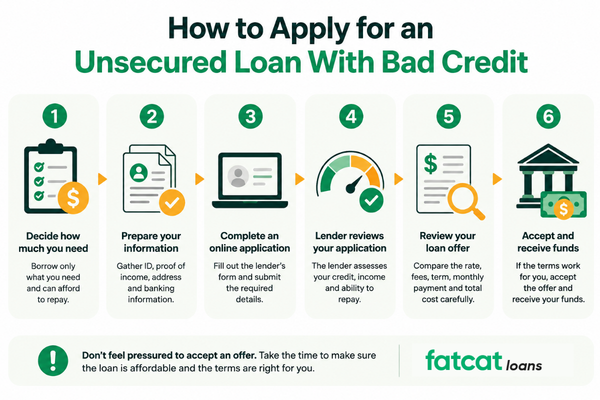
Don’t feel pressured to accept an offer simply because you’ve been approved. You can consider the cost and terms before deciding whether the loan is right for you.
Will an Unsecured Loan Require a Credit Check?
It depends on the lender and its application process. A lender may review your credit report when assessing an unsecured loan application, but the type of credit check can vary.
A hard credit check may be recorded on your credit report and can affect your credit score. A soft credit check doesn’t affect your credit score in the same way.
Before submitting an application, check whether the lender will perform a soft or hard credit check and at what stage of the process.
Our Soft vs Hard Credit Checks in Canada guide explains the difference and when each type of inquiry may be used.
What to Compare Before Accepting an Unsecured Loan
If you qualify for more than one loan, don’t choose based only on the amount offered or the size of the monthly payment.
Compare:
- Interest rate: the rate charged on the money you borrow.
- Fees: check which fees or optional charges apply.
- Repayment term: how long you’ll have to repay the loan.
- Payment amount: make sure each scheduled payment is affordable.
- Total borrowing cost: consider how much you’ll repay over the full term.
- Early repayment terms: check whether any conditions or charges apply if you want to repay the loan sooner.
- Late or missed payments: understand the consequences if you’re unable to make a payment.
- Credit reporting: if this matters to you, ask whether the lender reports account or payment activity to Equifax, TransUnion or both.
For federally regulated financial institutions, the FCAC explains that lenders must disclose information including the loan amount, interest rate, term, payment amount and applicable fees.

Should You Consider a Secured Loan Instead?
If you own an eligible asset, you may also come across secured borrowing. The main difference is that a secured loan requires collateral, while an unsecured loan doesn’t.
Providing collateral may affect the rates or terms available because it reduces some of the lender’s risk. However, it also creates an additional risk for you: the asset securing the debt may be at risk if you don’t repay the loan as agreed.
A secured loan isn’t automatically better for someone with bad credit, and an unsecured loan isn’t automatically safer simply because there’s no collateral. The cost, affordability and consequences of each option need to be considered.
If you have an asset that could potentially be used as collateral, compare the pros and cons of secured vs unsecured loans for bad credit before deciding which type of borrowing may suit your circumstances.
What If an Unsecured Loan Isn’t Affordable?
If the available loan offers are too expensive or the payments would stretch your budget, taking on additional debt may make your financial situation more difficult.
Consider whether you can reduce the amount you need, delay the expense or explore another solution before borrowing.
If you’re already having difficulty managing existing debts, you may want to explore free credit counselling in Canada before adding another loan payment.
If you’re still comparing different ways to borrow with a lower credit score, our Bad Credit Loans Canada guide covers the broader borrowing options and risks to consider.
Frequently Asked Questions About Unsecured Loans for Bad Credit
Can I get an unsecured loan with bad credit in Canada?
Possibly. Some lenders consider applicants with lower credit scores, but approval isn’t guaranteed. Your credit history, income, existing debts and ability to afford the payments may all be considered.
Do I need collateral for an unsecured loan?
No. An unsecured loan doesn’t require you to pledge a specific asset as collateral. However, you’re still responsible for repaying the debt according to the loan agreement.
What interest rate will I pay with bad credit?
There isn’t one standard rate for unsecured bad-credit loans in Canada. Your rate can depend on the lender, loan type, credit profile, income, debts, amount borrowed and repayment term. Compare the total borrowing cost of any offers you receive.
How quickly can I get an unsecured loan?
Application and funding times vary between lenders. Some lenders use online application processes, but you shouldn’t assume that approval or funding will be instant. Additional information or verification may be required.
Can an unsecured loan help improve my credit?
It depends on the lender’s credit-reporting practices and your overall credit file. If account or payment activity is reported to a credit bureau, it may become part of your credit history. There is no guaranteed credit-score increase, and late or missed payments that are reported may negatively affect your credit.
What happens if I don’t repay an unsecured loan?
Although there is no specific asset pledged as collateral, the lender may pursue collection activity or other remedies available under the loan agreement and applicable law. Missed payments may also affect your credit history if they’re reported to a credit bureau.
The Bottom Line
An unsecured loan can provide a way to borrow without pledging an asset as collateral, but bad credit can affect the options and borrowing costs available to you.
Before accepting a loan, compare the interest rate, fees, repayment term, payment amount and total borrowing cost. Most importantly, make sure the required payments fit your budget.
If you’re considering both secured and unsecured borrowing, don’t assume one type will automatically be cheaper or easier to obtain. Compare the actual offers and risks based on your circumstances.
This article is for informational purposes only and does not constitute financial advice. FatCat Loans is a loan comparison platform, not a lender. We don’t make lending decisions or guarantee approval, rates, funding times or terms.

The FatCat Loans Editorial Team delivers clear, accurate, and unbiased guidance on loans, credit, and personal finance in Canada. Our writers follow strict editorial standards to ensure every article is trustworthy, well-researched, and easy to understand, helping readers make confident financial decisions.